



Dermatologist-Led Skin Clinic Dermatologist-Led Skin Clinic · Saravanampatti, Coimbatore
Eczema & Dermatitis Treatment in Coimbatore
Dermatologist-led care that treats the flare and identifies what's setting it off.
Quick Answer
Eczema (also called dermatitis) is a group of inflammatory skin conditions causing dry, itchy, inflamed, and sometimes weeping skin, driven by a combination of skin barrier dysfunction, allergic or irritant triggers, and in some cases genetic predisposition. It is chronic for many patients, flaring and settling over time rather than resolving permanently, though flares themselves are very treatable.
What Is Eczema & Dermatitis Treatment?
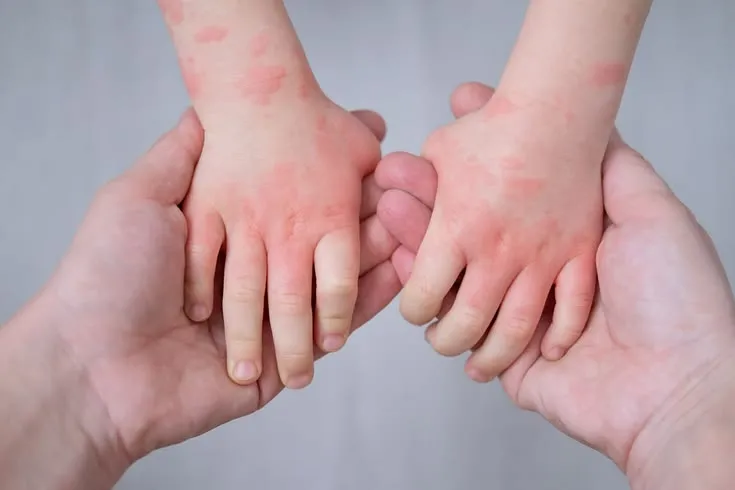
Eczema and dermatitis describe a group of related inflammatory skin conditions that share common features — dryness, itching, redness, and inflammation, sometimes with weeping or crusting during more severe flares. The umbrella term covers several distinct patterns, including atopic dermatitis and contact dermatitis, among others.
Because trigger identification is central to effective long-term management, treatment at Lashine goes beyond calming the current flare. Your dermatologist works to identify what's actually driving your eczema — an allergen, an irritant, dry skin and barrier dysfunction, or a combination — since flares treated without addressing the underlying trigger tend to recur more frequently and more severely. Where a specific trigger isn't clear from history alone, Skin Allergy Testing helps narrow it down.
Eczema is inflammatory and allergic — not autoimmune and not an infection. That distinction matters, since treatment for eczema differs from the approach used for conditions like Psoriasis or a fungal or bacterial skin infection.
Who Is It Suitable For?
Persistent or recurring dry, itchy, inflamed skin — whether it's a first flare or one that's been managed without lasting improvement — is the core signal for a dermatologist-led eczema plan.
Tried Moisturizers or Steroid Creams Without Lasting Results?
If over-the-counter options haven't given you lasting improvement or a clear understanding of your triggers, Skin Allergy Testing can help identify what's actually driving your flares.

Persistent or Recurring Symptoms
Dry, itchy, inflamed skin that persists or worsens
New Diagnosis
Seeking a management plan for a new eczema/dermatitis diagnosis
Suspected Contact Dermatitis
A reaction linked to a specific product or exposure
Severe Flares
Weeping, crusting, or secondarily infected skin
Why Patients Choose Lashine for Eczema Care
Trigger identification built into every plan, not treated as an optional add-on — here's what backs your eczema and dermatitis care at Lashine.

Saravanampatti
Coimbatore
IADVL Certified Dermatologists
Every eczema plan reviewed by a qualified skin doctor — not a generic cream handed out at the counter.
Trigger Identification Built In
Allergy and irritant triggers assessed as part of care, not treated as an afterthought once the flare has calmed.
Hygiene-First Clinic
Medical-grade sterilization for every procedure, including allergy testing and any in-clinic flare treatment.
Long-Term Barrier Care Focus
Treatment goes beyond calming the current flare, working toward reducing how often flares happen over time.
One consultation. The flare treated, and the trigger identified.
Bring your concerns to Lashine Skin & Hair Clinic, Saravanampatti, Coimbatore.
Who Should Be Cautious, or Know the Limits
Chronic for Many Patients — Not Permanently "Cured"
Eczema is chronic for many patients and typically isn’t permanently cured — realistic management focuses on reducing flare frequency and severity, not eliminating the condition entirely.
Broken or Weeping Skin Can Become Infected
Skin that’s broken from scratching or weeping can become secondarily infected, which needs to be identified and treated as part of the overall plan, not overlooked.
Some Systemic Treatments Require Monitoring
Certain systemic treatments for more severe eczema require monitoring and are not suitable for every patient.
Pregnant or Breastfeeding? Flag It Early
A handful of treatment options are adjusted or held off during this time, and your dermatologist will work out what’s appropriate.
Strong Steroids Are Dermatologist-Directed
Long-term overuse of strong topical steroids without medical guidance can thin the skin — this is why steroid strength and duration are dermatologist-directed rather than self-managed indefinitely.
How We Approach Eczema, Step by Step.
A five-step approach at Lashine — from confirming the diagnosis to identifying triggers, treating the active flare, and planning ongoing barrier care and review.
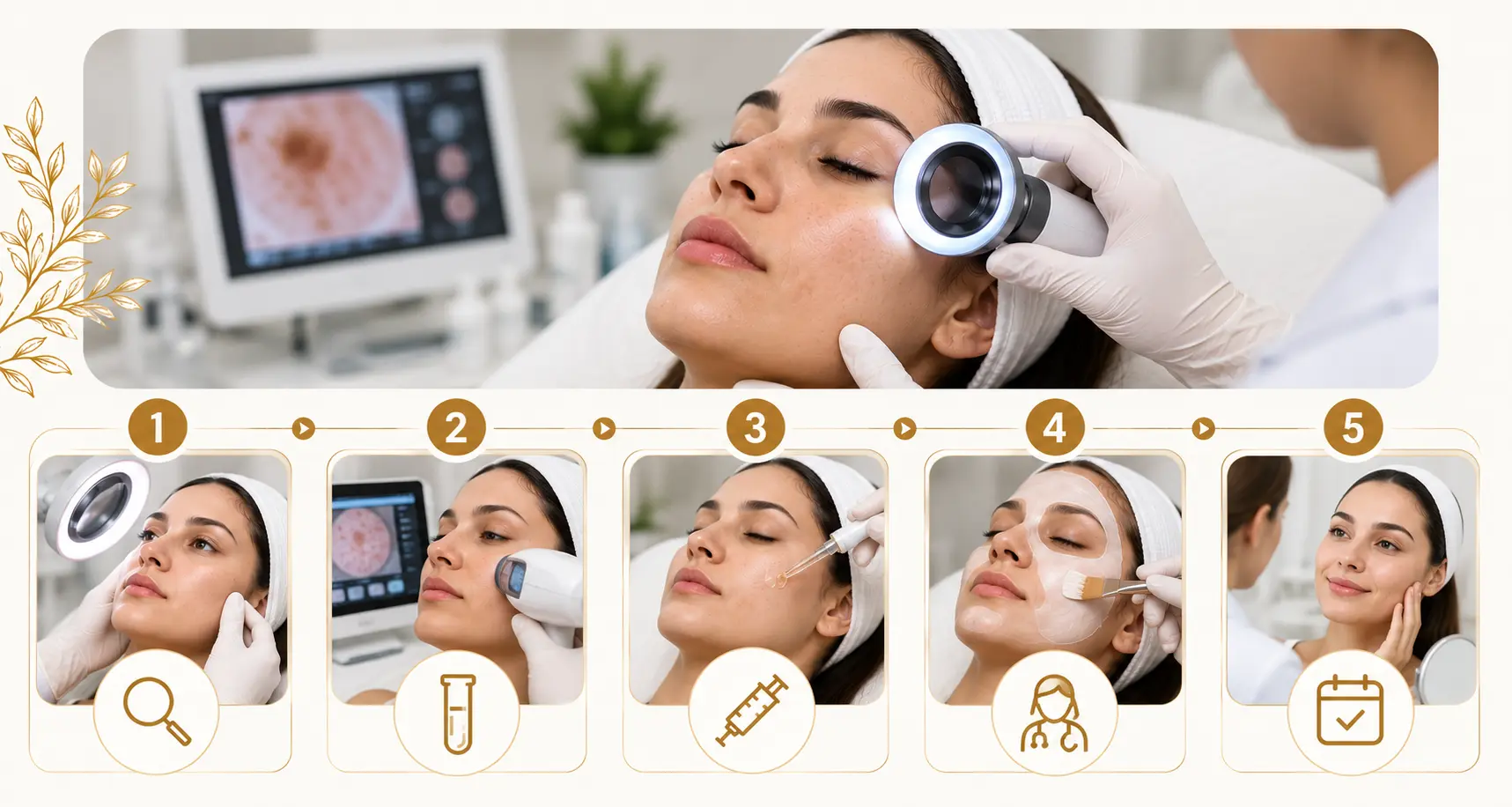
Clinical Examination & Diagnosis Confirmation
Your dermatologist examines the affected skin and confirms eczema/dermatitis rather than a visually similar condition, such as psoriasis or a fungal infection.
Trigger Assessment
Your history is reviewed for likely allergens, irritants, or exposures, with Skin Allergy Testing recommended where a specific trigger isn’t clear from history alone.
Active Flare Treatment
Topical or, for more severe cases, systemic treatment is used to calm current inflammation, itching, and any secondary infection.
Trigger Avoidance & Barrier Care
Once the flare is under control, a plan for avoiding identified triggers and maintaining the skin barrier (appropriate moisturizing, gentle products) is put in place to reduce recurrence.
Ongoing Review
Regular review continues, particularly for chronic or recurring eczema, to track flare frequency and adjust the management plan as needed.
Flare treatment is typically days to weeks, with trigger management continuing as an ongoing plan.
What to Expect, At a Glance
A quick reference for how eczema and dermatitis treatment is scoped — book a consultation to confirm the diagnosis and set out a plan.
Typical Course
Flare treatment typically days to weeks; trigger management is ongoing
Downtime
None
Best For
Confirmed eczema or dermatitis, whether a first flare or a recurring pattern
Not a Fit For
Patients expecting a single treatment to permanently eliminate future flares without trigger management
Realistic Results & Timeline.
A typical flare responds within days — but the long-term goal, fewer and milder flares over time, is a plan managed over months and years, not a single visit.

Flares treated in days, not weeks.
Initial Response — Within Days
A typical flare responds within days once appropriate treatment starts.
Timing Varies by Severity
Response timing shifts with how bad the flare was and how closely the plan gets followed.
Trigger ID Drives Long-Term Improvement
Reducing how often flares happen and how severe they are depends heavily on successful trigger identification and avoidance, which is why Skin Allergy Testing is often a meaningful part of the plan rather than an optional add-on.
Managed Over Months and Years
For many patients, eczema is a condition that’s actively managed over the long term rather than treated once and finished.
Protect Your Skin Between Flares.
Consistent barrier care between flares is one of the most effective ways to reduce how often they happen.

Consistent care now, fewer flares ahead.
Moisturize Consistently, Even Between Flares
Maintaining the skin barrier is one of the most effective ways to reduce flare frequency.
Avoid Identified Triggers
Introduce new products or exposures cautiously if you have a history of contact dermatitis.
Skip Leftover or Borrowed Medication
Skip the leftover tube from a past prescription, or anyone else’s medication, on a new patch — the wrong strength or duration can thin skin or worsen things rather than help.
Avoid Scratching Broken or Weeping Skin
This increases the risk of secondary infection.
Keep to Your Review Schedule
Particularly if flares are becoming more frequent or severe, rather than waiting them out repeatedly.
Questions About Management?
Our team will walk you through exactly what to do between and during flares.
Expert Care. Diagnosed, Not Assumed.
Every eczema and dermatitis plan at Lashine is examined and confirmed by a qualified dermatologist before treatment begins, so the flare is treated and the underlying trigger is actually identified — not just papered over with a generic cream.

Dr. Shabari A, MBBS, MD DVL
Dermatologist & Cosmetologist
Completed her MBBS and MD in Dermatology, Venereology & Leprosy, with 9 years of overall experience diagnosing and managing inflammatory and allergic skin conditions, including eczema and dermatitis.
Flares treated without addressing the underlying trigger tend to come back more frequently and more severely. My job is to find what's actually driving your eczema, not just calm what's in front of me today.
MBBS, MD DVL
Dermatology, Venereology & Leprosy
9 Years
Overall Clinical Experience
Specialized In
Inflammatory & Allergic Skin Conditions
Evidence-Based
Trigger Identification, Not Guesswork
Patient-First
Personalised, Coordinated Care

Dr. Lavanya Kavimani, MBBS
Dermatology Care, IADVL Member
Completed her MBBS at Tbilisi State Medical University in 2018, and is a registered member of the Indian Association of Dermatologists, Venereologists and Leprologists (IADVL).
Eczema is inflammatory and allergic, not autoimmune and not an infection — that distinction changes the whole treatment approach, which is why an accurate diagnosis always comes before any prescription.
MBBS
Tbilisi State Medical University, 2018
Registration
134837 — Tamil Nadu Medical Council, 2019
IADVL Member
Indian Association of Dermatologists, Venereologists & Leprologists
Specialized In
Eczema, Dermatitis & Allergic Skin Care
Patient-First
Approach with Personalised Care
Frequently Asked Questions
Your questions about eczema and dermatitis, answered by our experts. Clear answers. Real guidance.
Still Have Questions?
Speak to our dermatologist and get an honest, condition-specific plan for your skin.
Book a ConsultationDermatologist Supervised Medical-Grade Care
Not permanently, for most patients — eczema is typically a chronic condition managed through flare treatment and trigger avoidance rather than cured outright. Many patients see significant improvement in flare frequency and severity with consistent management.
Common triggers include allergens, irritants (certain soaps, fabrics, or chemicals), dry weather, stress, and skin barrier dysfunction. Triggers vary significantly by patient, which is why identification through history and, where needed, Skin Allergy Testing, matters.
"Eczema" and "dermatitis" are often used interchangeably and describe a related group of inflammatory skin conditions, including atopic dermatitis and contact dermatitis. Your dermatologist will confirm the specific type based on presentation and trigger history.
No. Eczema is an inflammatory/allergic condition, not an infection, and cannot be spread through contact with another person.
Long-term management combines identifying and avoiding personal triggers with consistent skin barrier care (moisturizing) and, during flares, topical or systemic treatment as needed — this combination reduces flare frequency and severity over time.
Weeping occurs during more severe flares when the skin barrier breaks down significantly, sometimes alongside secondary infection. This needs prompt dermatologist assessment, since infected eczema requires different treatment than uncomplicated flares.
It's shaped by how severe the flare is and whether allergy testing gets added in — your dermatologist works out the actual figure with you at consultation rather than quoting one blind.
We're Here to Help
Dealing with persistent dry, itchy, or inflamed skin? Book a consultation with our dermatologist today.
Related Treatments
Explore other ways we treat clinical dermatology alongside Eczema & Dermatitis Treatment.
Related Categories You May Also Need
Not sure what's causing your skin condition?
Start with a full skin assessment — your dermatologist maps the right combination before recommending anything.
Dealing With Persistent Dry, Itchy, or Inflamed Skin?
If you’re concerned about your skin, hair, or health, we’re here to help with expert treatment. Book a private consultation at LaShine Skin & Hair Clinic in Saravanampatti, Coimbatore. Your dermatologist can guide you through symptoms, appropriate testing, diagnosis, treatment and follow-up.
Eczema & Dermatitis Care Across Coimbatore
Patients visit LaShine Skin & Hair Clinic in Saravanampatti from across Coimbatore for personalised Eczema & Dermatitis and professional dermatologist-led care.
- Saravanampatti
- Vilankurichi
- Kalapatti
- Peelamedu
- Gandhipuram
- RS Puram
- Ganapathy
- Thudiyalur
- Sathy Road
- Avinashi Road
Looking for Eczema & Dermatitis near your area? You can visit our Saravanampatti clinic and speak with the dermatologist privately.

LaShine Skin & Hair Clinic
101A/3, First Floor,Sathy Rd, Amman Kovil,Saravanampatti, Coimbatore – 641035,Tamil Nadu, India
View on Google MapsYour concerns deserve private, professional care. Take the next step towards clear answers and appropriate treatment.