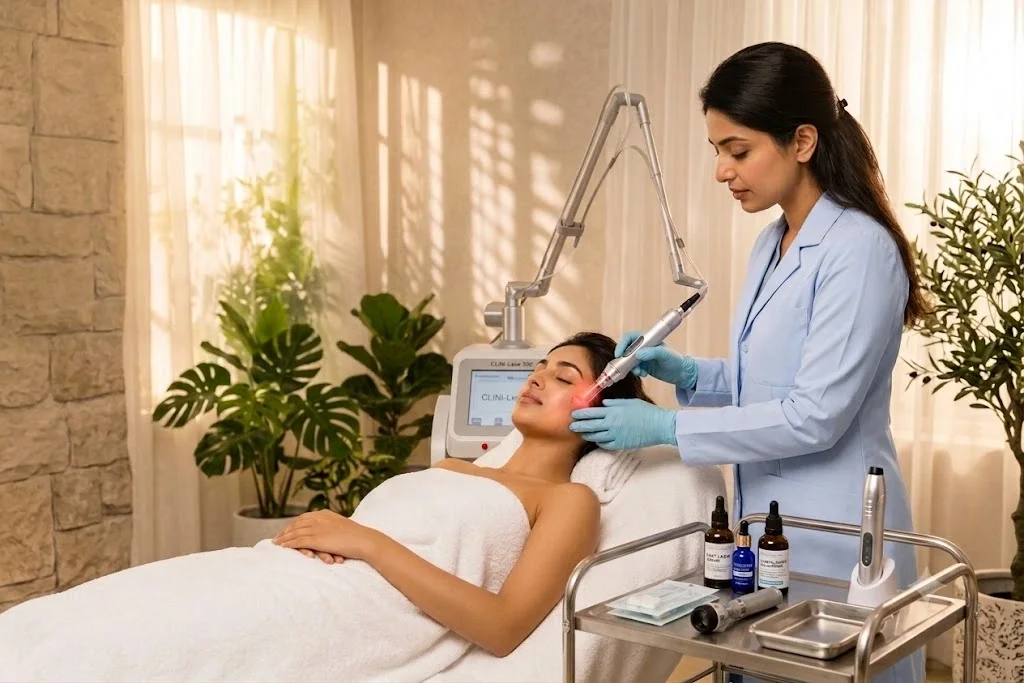
Accurate diagnosis and proper medical treatment for skin, hair and nail conditions — not just symptom relief, but identifying and treating the underlying cause.
Clinical dermatology focuses on medically diagnosed skin, hair, and nail conditions that require proper evaluation, evidence-based treatment, and long-term medical care rather than cosmetic procedures or temporary symptom relief.
Every condition has a different cause—whether autoimmune, infectious, inflammatory, allergic, or genetic—which is why an accurate diagnosis is always the most important first step before treatment begins.
Chronic & Autoimmune ConditionsLong-term medical conditions that require continuous dermatology care.
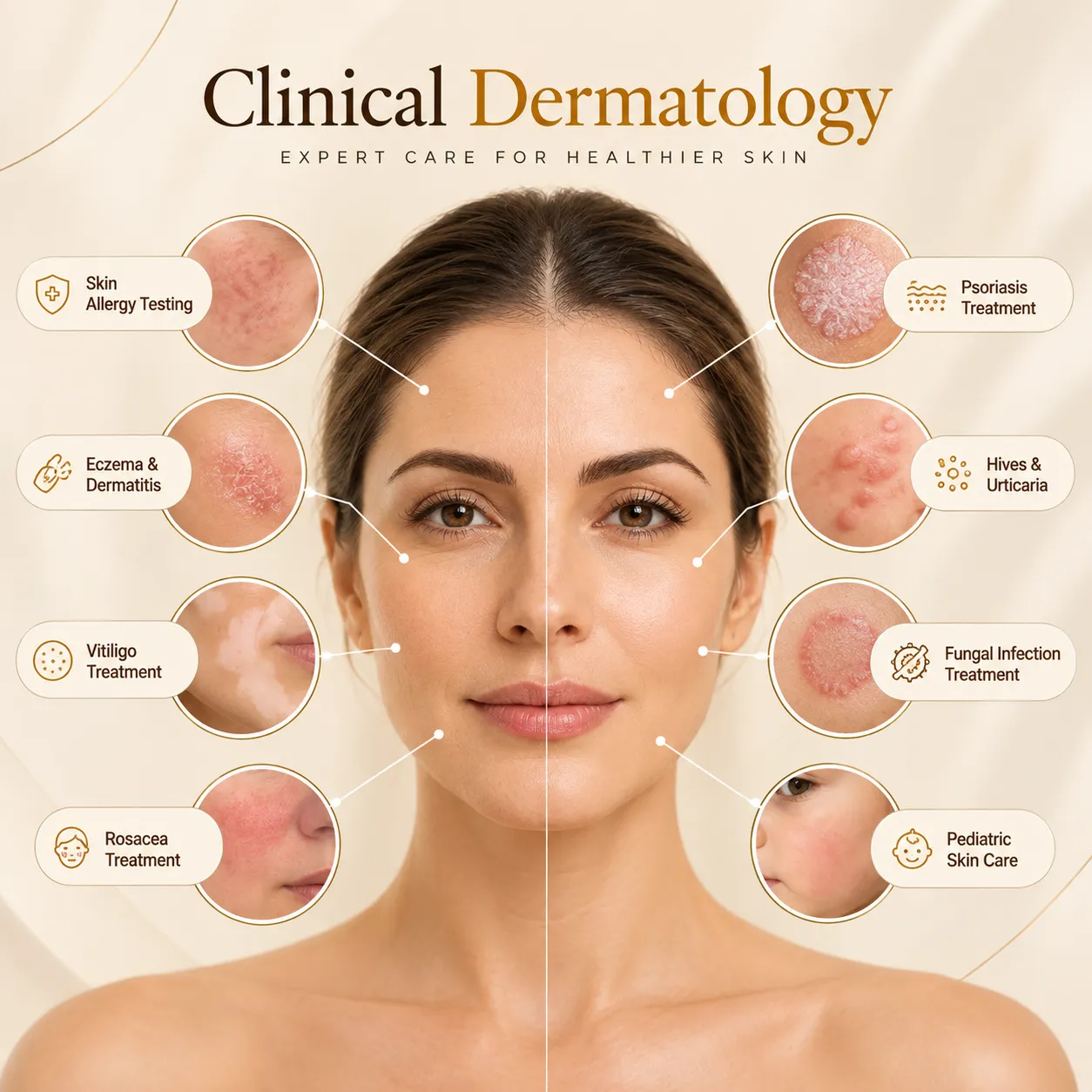
PsoriasisVitiligoLichen PlanusPemphigus
Infections & Inflammatory DisordersConditions requiring accurate diagnosis before selecting treatment.
Fungal InfectionsEczemaRosaceaScabiesHives
Many skin conditions can look alike but require completely different treatments. A fungal infection, eczema, psoriasis, allergic rash, or autoimmune disease may appear similar, yet using the wrong medicine can delay healing or even worsen the condition. At LaShine, every patient undergoes a detailed clinical examination and, whenever necessary, appropriate investigations before a personalised treatment plan is started.
Clinical dermatology is suitable for anyone experiencing persistent skin, hair, or nail concerns that require proper medical evaluation rather than temporary symptom relief or self-medication.
Diagnose First. Treat Precisely.
Whether you're dealing with a chronic skin condition, recurring infection, unexplained itching, nail changes, excessive sweating, or a concern that hasn't improved with over-the-counter creams, our dermatologists create a personalised treatment plan based on an accurate diagnosis.
Persistent Skin ProblemsRashes, patches or skin changes that are not healing on their own.
Autoimmune ConditionsVitiligo, Psoriasis, Pemphigus and Lichen Planus.
Skin InfectionsFungal, bacterial, viral infections and scabies.
Chronic Skin ConcernsEczema, hives, nail disorders and children’s skin care.
Persistent Skin Problems
Rashes, patches or skin changes that are not healing on their own.
Autoimmune Conditions
Vitiligo, Psoriasis, Pemphigus and Lichen Planus.
Skin Infections
Fungal, bacterial, viral infections and scabies.
Chronic Skin Concerns
Eczema, hives, nail disorders and children’s skin care.
Dermatologist-Led Diagnosis
Evidence-Based Treatment
Skin, Hair & Nail Care
Advanced Clinical Evaluation
Personalised Treatment Plans
Long-Term Condition Management
Clinical Dermatology Treatments
Concerns & Treatments We Offer
Every clinical skin condition starts with an accurate diagnosis. Explore the conditions we treat below and find the right dermatologist-supervised treatment for your concern.
Diagnosis first. Similar-looking conditions can have very different causes. A qualified dermatologist should confirm the diagnosis before any medication or procedure.
Why Choose LaShine
Why Choose LaShine Clinic?
Clinical dermatology should never rely on guesswork. Every patient at LaShine is evaluated by a dermatologist, with investigations performed whenever necessary, so your treatment is based on an accurate diagnosis instead of assumptions or trial-and-error.
Diagnosis
First
01
Diagnosis Before Treatment
Many skin conditions look similar on the surface. Every patient is properly examined before treatment begins, helping avoid misdiagnosis, delayed recovery, and unnecessary medications.
02
One Complete Clinical History
Your dermatologist understands your previous treatments, recurring flare-ups, allergies, and medical history before recommending the most appropriate treatment plan.
03
Coordinated Medical Care
Patients often have multiple skin conditions at the same time, such as eczema with fungal infection or psoriasis with nail changes. Our dermatologist plans treatment in the right sequence.
04
Long-Term Follow-Up
Autoimmune and chronic skin diseases require continuous monitoring. Your treatment plan is reviewed and adjusted based on your progress instead of relying on a single consultation.
Our Clinical Approach
How We Treat Clinical Dermatology
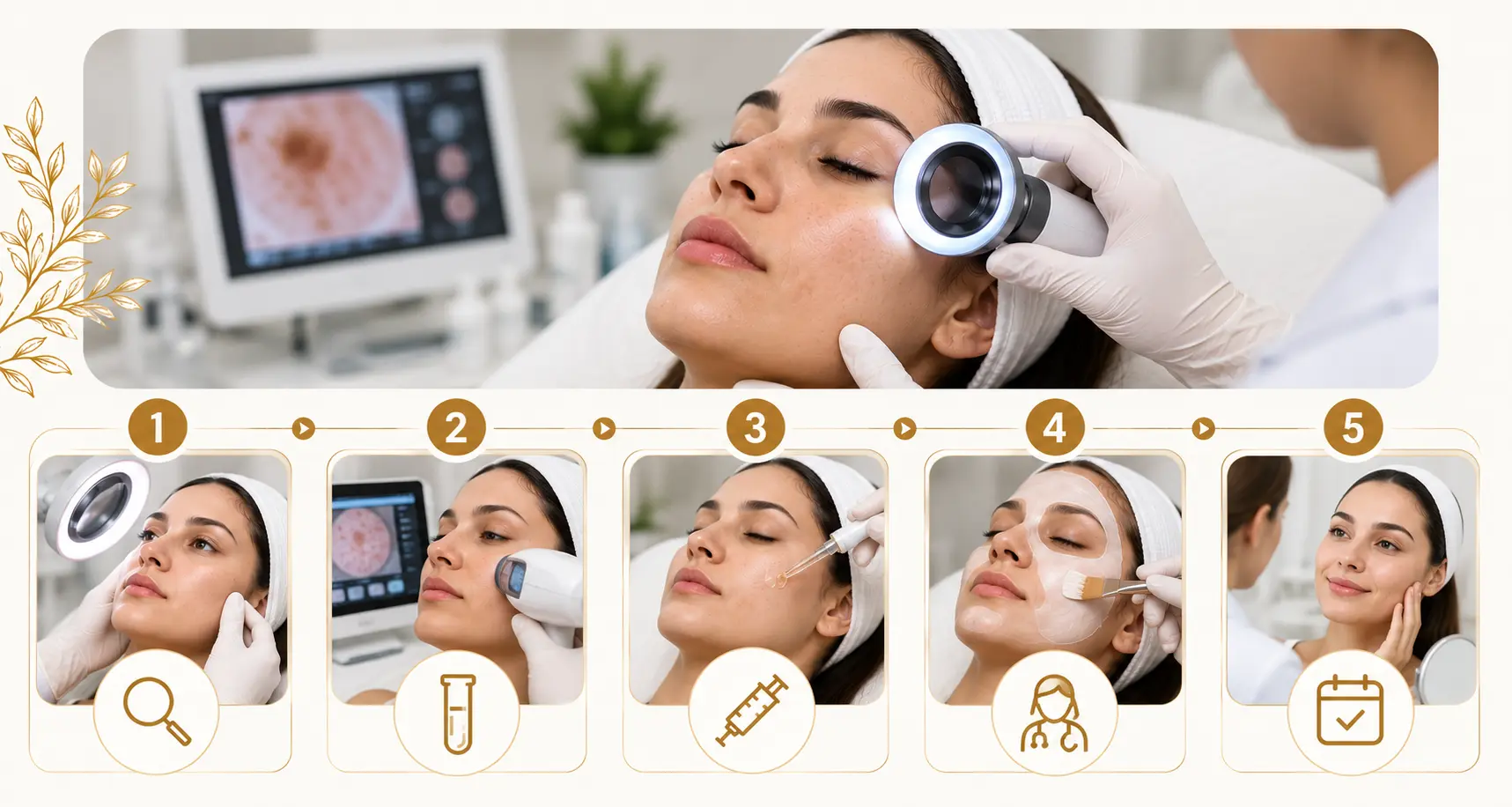
Every treatment at LaShine begins with an accurate clinical diagnosis. From identifying the underlying cause to creating a personalised treatment plan and long-term follow-up, every step is guided by a dermatologist.
Diagnosis
Before Treatment
01
Clinical Examination & Testing
Your dermatologist carefully examines your skin, hair, or nail condition and, when required, recommends Skin Allergy Testing or other investigations to confirm the diagnosis before treatment begins.
02
Confirm the Underlying Cause
Conditions that appear similar can have very different causes. We identify whether your concern is fungal, bacterial, viral, parasitic, allergic, inflammatory, or autoimmune before selecting treatment.
03
Condition-Specific Treatment
Your treatment plan is tailored to your confirmed diagnosis. Chronic conditions such as Vitiligo, Psoriasis, Pemphigus, and Lichen Planus follow long-term management, while infections receive targeted cause-specific treatment.
04
Specialized Care When Needed
Children, nail disorders, and excessive sweating require dedicated treatment protocols. Your dermatologist recommends specialised care whenever appropriate.
05
Review & Long-Term Management
Chronic and autoimmune skin diseases are reviewed regularly to monitor improvement, control flare-ups, and adjust treatment whenever necessary.
Compare Conditions
Clinical Dermatology Conditions Compared
From autoimmune conditions like vitiligo and psoriasis to infections, allergic reactions, and pediatric skin concerns, every condition has its own cause and its own path forward. Use this comparison to see how each condition typically presents, what's driving it, and what long-term management looks like — then book a consultation for a proper diagnosis before starting any treatment.
Comparison of clinical dermatology conditions assessed at LaShine Skin & Hair Clinic, including typical presentation, cause type, and management approach
Fungal, bacterial, viral, and parasitic skin infections can look similar to the untrained eye but need entirely different treatment — the wrong product, like a steroid cream on a fungal infection, can look better short-term while making things worse underneath. Use this comparison to spot the distinguishing feature, then book a consultation to confirm which one you're actually dealing with.
Comparison of fungal, bacterial, viral, and scabies skin infections treated at LaShine Skin & Hair Clinic, including common signs, treatment category, and key distinguishing feature
Clinical dermatology includes many different medical conditions, each responding differently to treatment. Your dermatologist provides realistic expectations based on your diagnosis rather than a one-size-fits-all timeline.
Personalised Timeline, Not Guesswork
01
Infections
Fungal, bacterial, viral infections and scabies usually begin improving within 1–3 weeks after the correct diagnosis and treatment. Complete recovery depends on the specific infection and following the prescribed medication course.
02
Inflammatory & Allergic Conditions
Conditions such as eczema, rosacea, hives and pityriasis rosea often improve within days to a few weeks when treated correctly and triggers are properly identified and managed.
03
Autoimmune & Chronic Conditions
Vitiligo, psoriasis, pemphigus and lichen planus usually require long-term management. Treatment focuses on disease control, remission and reducing flare-ups rather than a one-time cure.
04
Specialized Conditions
Nail disorders, hyperhidrosis and pediatric skin conditions vary considerably in recovery time. Your dermatologist will explain realistic expectations based on your diagnosis.
Your Timeline Will Be Personalised
Clinical dermatology covers many different medical conditions. During your consultation, your dermatologist will explain a realistic treatment timeline based on your diagnosis—not a one-size-fits-all estimate.
Successful clinical dermatology treatment doesn't end when you leave the clinic. Following medications correctly, attending scheduled reviews, and preventing recurrence are essential for long-term skin health.
Follow the Plan, Protect Your Results
01
Complete Your Full Course
Finish every prescribed antifungal, antibiotic, or antiviral medication exactly as directed—even if symptoms improve early. Stopping treatment too soon increases the risk of recurrence and medication resistance.
02
Avoid Self-Medicating
Don't use leftover steroid creams or someone else's prescription for a new skin problem. Different skin conditions often look similar, and incorrect treatment can worsen infections or delay the correct diagnosis.
03
Attend Regular Reviews
Chronic and autoimmune conditions such as psoriasis, vitiligo, pemphigus, and lichen planus require regular follow-up. Early review helps detect flare-ups quickly and allows treatment to be adjusted before symptoms worsen.
04
Prevent Reinfection
For contagious conditions such as scabies, household members or close contacts may also need treatment to prevent reinfection and achieve complete recovery.
CLINICAL DERMATOLOGY INSIGHTS
Clinical Dermatology
Explore dermatologist-led information about common skin diseases, infections, inflammatory conditions and clinical dermatology.
Every clinical dermatology consultation at LaShine is led by a qualified dermatologist. From diagnosing skin, hair and nail disorders to planning long-term treatment, every decision is based on clinical evaluation rather than guesswork.
Dermatologist
Led Care
9+ YearsClinical Experience
Dr. Shabari A, MBBS, MD DVL
Consultant Dermatologist & Cosmetologist
Completed her MBBS and MD in Dermatology, Venereology & Leprosy with 9+ years of experience diagnosing and treating chronic skin diseases, autoimmune disorders, skin infections, nail disorders and inflammatory skin conditions.
Many skin conditions look similar at first glance, but the correct treatment depends entirely on the diagnosis. My priority is always to identify the underlying cause before recommending medication or procedures.
Graduated from Tbilisi State Medical University in 2018 and is an active member of the Indian Association of Dermatologists, Venereologists and Leprologists (IADVL), providing evidence-based clinical dermatology care.
Clinical dermatology isn't about prescribing the strongest cream. It's about understanding why a condition developed, confirming the diagnosis, and creating a treatment plan that's safe, effective and appropriate for each individual patient.
You often can't tell from appearance alone because many skin conditions look very similar. Clinical examination, and sometimes Skin Allergy Testing or other investigations help identify the exact cause before treatment begins.
It's not advisable without confirming the diagnosis first. Using the wrong cream—especially a steroid cream on a fungal infection—may temporarily reduce redness while allowing the infection to worsen underneath.
These conditions are generally chronic or autoimmune disorders that are managed over the long term rather than permanently cured. Treatment focuses on controlling symptoms, achieving remission where possible, and reducing flare-ups.
Yes. Scabies spreads through close skin contact, so household members or other close contacts often require treatment at the same time to prevent reinfection.
Yes. Pediatric Skin Care uses age-appropriate diagnosis, medication choices, and dosing that differ from adult dermatology care.
If a skin rash, patch, suspected infection, or nail problem lasts longer than two weeks, spreads, becomes painful, or does not improve with basic care, consider consulting a dermatologist. A timely assessment may help identify the cause and guide appropriate treatment.
Get the Right Diagnosis First
Whether it's a persistent rash, suspected infection, chronic skin condition, or unexplained skin change, our dermatologists are here to help you find the cause and recommend the right treatment.
If you’re concerned about your skin, hair, or health, we’re here to help with expert treatment. Book a private consultation at LaShine Skin & Hair Clinic in Saravanampatti, Coimbatore. Your dermatologist can guide you through symptoms, appropriate testing, diagnosis, treatment and follow-up.
Patients visit LaShine Skin & Hair Clinic in Saravanampatti from across Coimbatore for personalised Clinical Dermatology and professional dermatologist-led care.