


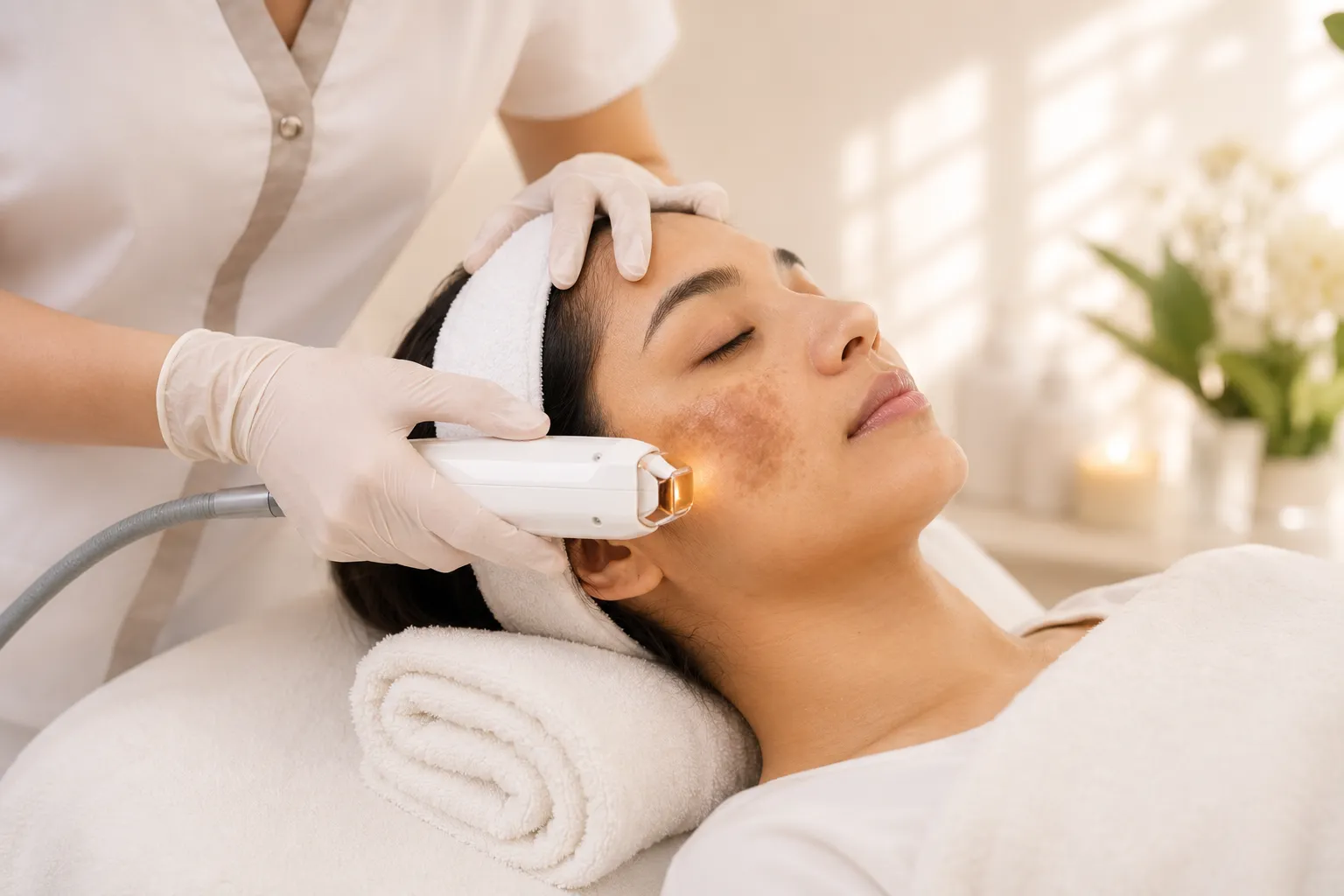
Dermatologist-Led Skin Clinic
Melasma Treatment in Coimbatore
Melasma can cause stubborn patches of facial pigmentation. A dermatologist can help assess possible triggers and recommend a plan suited to your skin.
- Personalized Treatment Planning
Quick Answer
Melasma treatment is a combination of strict daily sun protection, prescription topical therapy, and — where needed — in-clinic procedures like chemical peels or laser toning , managed over 8–12 weeks with ongoing maintenance. Melasma cannot be permanently removed in one procedure — it is a chronic, hormone- and sun-triggered condition that is significantly lightened and controlled, not cured, and it can recur if sun protection lapses. At Lashine Clinic in Saravanampatti, Coimbatore, treatment starts by identifying each patient's specific trigger — hormonal, sun-related, or genetic — before any procedure is recommended.
Melasma is one of the most persistent pigmentation concerns we see, and also one of the most mismanaged — because it isn't caused by one thing. Sun exposure, hormonal changes (pregnancy, contraceptive use, thyroid conditions), and genetic predisposition can all play a role, often together. At Lashine, your dermatologist identifies your specific trigger pattern before recommending treatment, because melasma that's simply "peeled" without addressing its trigger tends to return, sometimes darker.
What Is Melasma Treatment?
Melasma treatment at Lashine is a combination approach, not a single procedure. It typically involves strict sun protection, topical therapy to gradually fade existing pigmentation, and in-clinic procedures such as chemical peels or laser toning to accelerate results — layered according to how deep the pigmentation sits and what's triggering it.
Because melasma is a chronic, trigger-driven condition rather than a one-time skin issue, treatment is framed as ongoing management with maintenance, not a single course that "cures" it permanently.
Melasma isn't the same as regular pigmentation — it's a specific, hormonally- and sun-driven condition. Peeling it without addressing the trigger tends to bring it back, sometimes darker, which is why trigger identification comes first at LaShine.
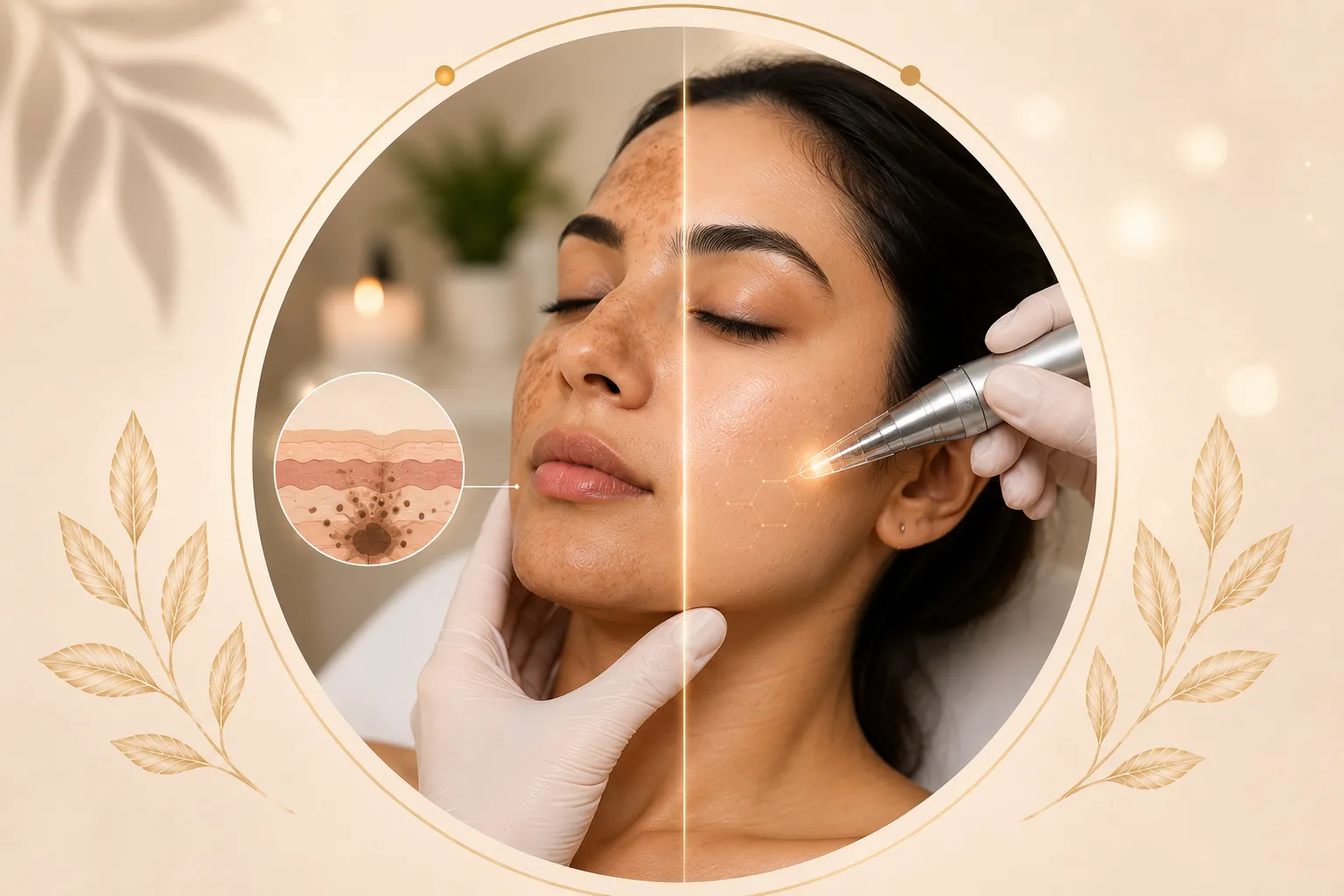
Who Is It Suitable For?
Symmetrical brown-to-grey patches on the face — not just any pigmentation — are the core signal that this page, rather than general pigmentation care, is the right fit. Your assessment confirms the pattern and its trigger.
Not Sure If It's Melasma? Get Diagnosed First.
If you haven't confirmed your pattern yet, the Pigmentation Treatment assessment page is the right starting point before treatment planning here.
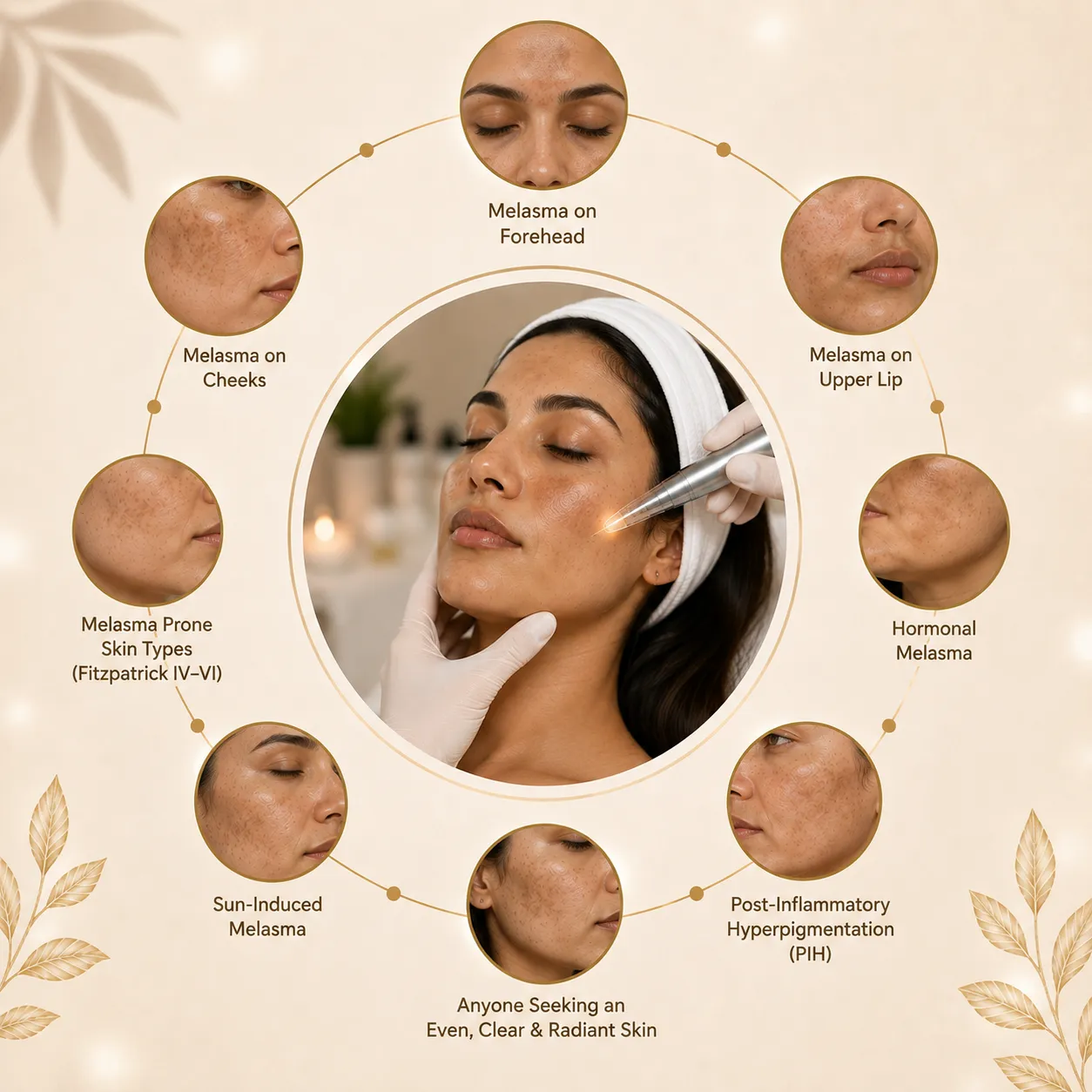
Classic Facial Melasma Pattern
Symmetrical patches on cheeks, forehead, upper lip, or chin
Pregnancy / Hormonal Onset
Appeared or worsened with pregnancy, contraceptives, or thyroid changes
Darkens With Sun or Heat
Pigmentation noticeably worsens with sun or heat exposure
Tried Creams or a Peel Elsewhere
No lasting improvement without trigger management
Why Patients Choose LaShine for Melasma
A plan built around what's triggering your melasma — not a fixed peel package applied to every patient. Here's what backs your melasma plan at LaShine.

Saravanampatti
Coimbatore
IADVL Certified Dermatologists
Every melasma plan reviewed by a qualified, credentialed skin doctor — not a fixed whitening package.
Trigger-Based Assessment
Hormonal, sun-related, and genetic factors evaluated together before any treatment is recommended.
Combination Protocol, Not One Peel
Sun protection, topical therapy, and in-clinic procedures layered to how deep your pigmentation sits.
Hygiene-First Clinic
Medical-grade sterilization for every procedure.
One consultation. A trigger-based plan, not a generic peel.
Bring your concerns to LaShine Skin & Hair Clinic, Saravanampatti, Coimbatore.
Who Should Be Cautious, or Know the Limits
Cannot Be Permanently "Removed"
Melasma can be significantly lightened and controlled, but it tends to recur if sun protection and maintenance are stopped, especially in Coimbatore’s high-UV climate.
Not Suitable During Pregnancy or Breastfeeding
Pregnant or breastfeeding patients are limited to safe topical options only — most active in-clinic procedures are deferred until after pregnancy/breastfeeding.
Aggressive Lasers Can Worsen Melasma
Used without proper assessment, lasers can trigger post-inflammatory pigmentation — this is why device selection and settings are dermatologist-controlled, not a fixed package.
This Is a Multi-Month Process, Not a Quick Fix
Patients expecting a single-session result should be aware this is a management process over weeks and months, not one procedure.
How We Treat Melasma, Step by Step.
A five-step approach at LaShine — from identifying your specific trigger pattern to a foundation sun-care routine, topical therapy, in-clinic procedures, and ongoing relapse monitoring.
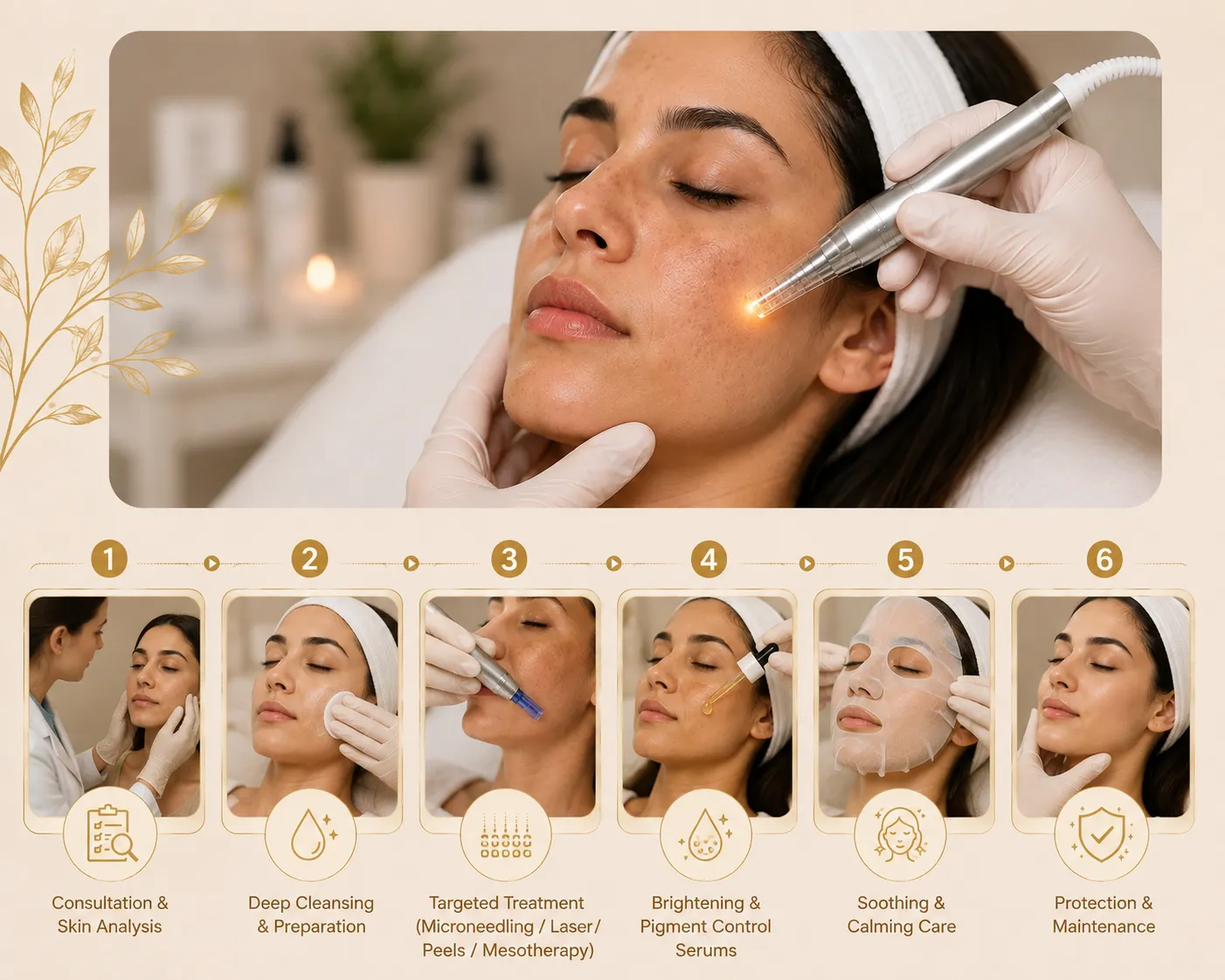
Trigger Assessment
Your dermatologist examines the pigmentation pattern and depth, and reviews hormonal history (pregnancy, contraceptive use, thyroid status) and sun exposure habits, since treatment approach differs by trigger and by how deep the pigment sits.
Foundation Sun Protection Plan
A daily, high-protection sun-care routine is set first — this step is non-negotiable in melasma management, since any active treatment without strict sun protection will underperform or relapse quickly.
Topical Therapy
Dermatologist-prescribed topical agents are started to gradually fade existing pigmentation over several weeks, adjusted based on skin response.
In-Clinic Procedures (If Needed)
Chemical peels or Laser Toning may be added to accelerate fading once the skin is stable on topical therapy — session type and frequency depend on how your melasma responds, not a fixed protocol for everyone.
Maintenance & Relapse Monitoring
Once pigmentation has visibly improved, a lighter maintenance routine and periodic review continue, since melasma can resurface with sun exposure, hormonal shifts, or heat — early re-intervention keeps it manageable.
A typical melasma course runs 8–12 weeks for visible fading, with ongoing maintenance beyond that — not a single peel.
What to Expect, At a Glance
A quick reference for how melasma management unfolds — book a consultation for a plan built around your specific trigger pattern.
Typical Course
8–12 weeks for visible fading; ongoing maintenance beyond that
In-Clinic Sessions (If Used)
3–6 sessions, spaced 2–4 weeks apart
Downtime
None for topical therapy; mild redness or flaking for 1–3 days after a peel/laser toning session
Best For
Symmetrical facial pigmentation with a hormonal, sun, or genetic trigger
Not a Fit For
Anyone expecting permanent, one-time removal — see Pigmentation Treatment if you’re not sure what type you have
Realistic Results & Timeline.
Melasma fades gradually, not overnight — and unlike a single scar procedure, it doesn't have a fixed "end point," since sun, heat, and hormones can reactivate it.

Fading begins by week 4, visible by week 8–12.
Initial Fading — 4 to 6 Weeks
Most patients notice initial lightening within 4–6 weeks of starting topical therapy and consistent sun protection.
More Visible Improvement — 8 to 12 Weeks
Especially when in-clinic sessions like chemical peels or laser toning are added to the topical plan.
No Fixed "End Point"
Unlike a single scar procedure, melasma management continues — sun exposure, hormonal changes, and Coimbatore’s heat and humidity can all reactivate it.
Ongoing Maintenance & Touch-Ups
Ongoing sun protection and periodic touch-ups are part of realistic, long-term control, not optional extras.
Want a Realistic Timeline for Your Skin?
Bring your concerns in and we'll map a plan based on your trigger — not a generic estimate.
Protect Your Progress Between Reviews.
Melasma responds to daily habits as much as in-clinic procedures — a few consistent steps keep your fading on track between visits.

Daily sunscreen, steadier results.
Daily Sunscreen Is Non-Negotiable
Reapplication through the day matters more for melasma than for almost any other skin concern.
Add Physical Sun Protection
A wide-brimmed hat or physical sun protection is recommended for outdoor commutes, in addition to sunscreen.
Avoid Steam, Heat Facials & Saunas
Heat exposure can worsen melasma independent of sun exposure — skip steam, heat-based facials, or hot yoga/saunas during active treatment.
Don't Self-Stack Lightening Products
Melasma treatment is adjusted based on how your skin is actually responding, not by adding more products between reviews.
Report New Hormonal Changes
Report any pregnancy or new hormonal medication (including contraceptives) at your next review, as it may change your plan.
Questions About Aftercare?
Our team will walk you through exactly what to do between your reviews.
Expert Care. Assessed at the Trigger.
Every melasma treatment plan at LaShine is built and reviewed by a qualified dermatologist, so your protocol is matched to your specific trigger pattern — hormonal, sun-related, or genetic — not a fixed whitening package.

Dr. Shabari A, MBBS, MD DVL
Dermatologist & Cosmetologist
Completed her MBBS and MD in Dermatology, Venereology & Leprosy, with 9 years of overall experience in pigmentation and melasma management.
Melasma that's simply peeled without addressing what's triggering it tends to come back, sometimes darker. My job is to identify the hormonal, sun, or genetic pattern first — before recommending any procedure.
MBBS, MD DVL
Dermatology, Venereology & Leprosy
9 Years
Overall Clinical Experience
Specialized In
Pigmentation & Melasma Management
Evidence-Based
Trigger-Based, Combination Protocols
Patient-First
Personalised, Long-Term Care

Dr. Lavanya Kavimani, MBBS
Dermatology Care, IADVL Member
Completed her MBBS at Tbilisi State Medical University in 2018, and is a registered member of the Indian Association of Dermatologists, Venereologists and Leprologists (IADVL).
Aggressive lasers used without proper assessment can actually worsen melasma — that's why device selection and settings are dermatologist-controlled here, never a fixed salon-style package.
MBBS
Tbilisi State Medical University, 2018
Registration
134837 — Tamil Nadu Medical Council, 2019
IADVL Member
Indian Association of Dermatologists, Venereologists & Leprologists
Specialized In
Melasma & Facial Pigmentation Care
Patient-First
Approach with Personalised Care
Related Treatments
Explore other ways we treat pigmentation & skin tone alongside Melasma Treatment.
Related Categories You May Also Need
Not sure what's causing your pigmentation?
Start with a full skin assessment — your dermatologist maps the right combination before recommending anything.
Frequently Asked Questions
Your questions about melasma treatment, answered by our experts. Clear answers. Real guidance.
Still Have Questions?
Speak to our dermatologist and get an honest recommendation for your skin.
Book a ConsultationDermatologist Supervised Medical-Grade Care
No. Melasma can be significantly lightened and well-controlled, but not permanently removed in one procedure — it tends to recur with sun exposure, heat, or hormonal changes, so ongoing sun protection and maintenance are part of realistic treatment.
Most active in-clinic procedures are deferred during pregnancy and breastfeeding. Safe topical options and strict sun protection are used instead, with fuller treatment resumed afterward if needed.
No. Laser Toning is used alongside topical therapy and strict sun protection, not as a standalone fix — melasma treated without trigger management tends to relapse.
Aggressive or unsuitable procedures, especially without proper sun protection afterward, can trigger post-inflammatory pigmentation in melasma-prone skin. This is why treatment intensity and device settings need dermatologist assessment rather than a standard salon package.
Most patients notice initial fading within 4–6 weeks of starting treatment, with more visible results by 8–12 weeks. Full management is ongoing rather than a fixed end date.
No. Melasma is a specific, hormonally-driven and sun-triggered condition, unlike general or mixed pigmentation. If you're not sure which one you have, the Pigmentation Treatment assessment page is the right starting point.
Sun exposure, heat, hormonal changes (pregnancy, contraceptives, thyroid conditions), and genetic predisposition are the main triggers, often overlapping in the same patient — which is why trigger identification comes before treatment, not after.
No, though it's more common in women due to hormonal triggers like pregnancy and contraceptive use. Men can develop melasma too, typically from sun exposure or genetic predisposition.
We're Here to Help
Not sure whether it’s melasma or general pigmentation? Book a consultation with our dermatologist today.
Not Sure What's Triggering Your Melasma?
If you’re concerned about your skin, hair, or health, we’re here to help with expert treatment. Book a private consultation at LaShine Skin & Hair Clinic in Saravanampatti, Coimbatore. Your dermatologist can guide you through symptoms, appropriate testing, diagnosis, treatment and follow-up.
Melasma Treatment Care Across Coimbatore
Patients visit LaShine Skin & Hair Clinic in Saravanampatti from across Coimbatore for personalised Melasma Treatment and professional dermatologist-led care.
- Saravanampatti
- Vilankurichi
- Kalapatti
- Peelamedu
- Gandhipuram
- RS Puram
- Ganapathy
- Thudiyalur
- Sathy Road
- Avinashi Road
Looking for Melasma Treatment near your area? You can visit our Saravanampatti clinic and speak with the dermatologist privately.
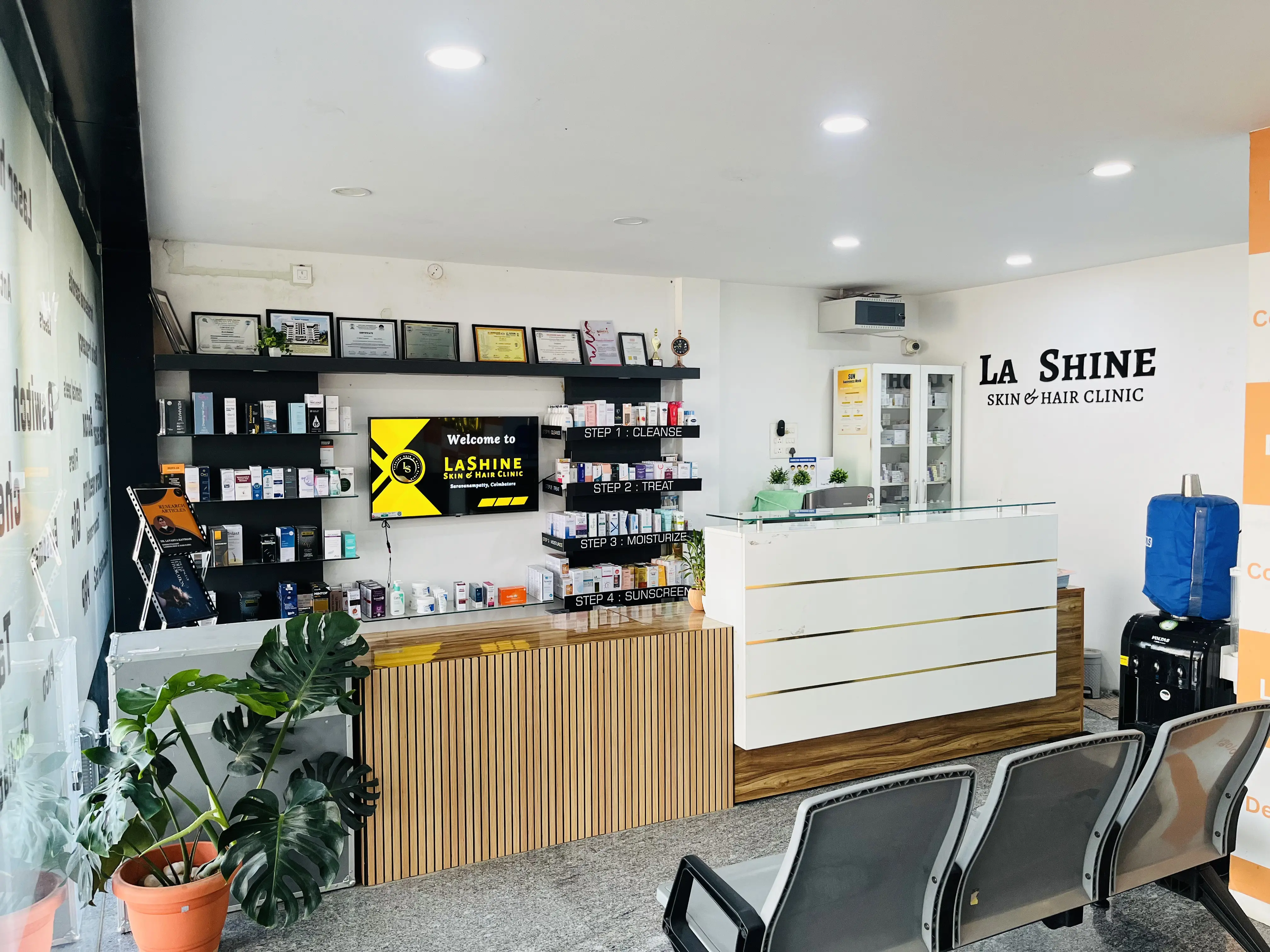
LaShine Skin & Hair Clinic
101A/3, First Floor,Sathy Rd, Amman Kovil,Saravanampatti, Coimbatore – 641035,Tamil Nadu, India
View on Google MapsYour concerns deserve private, professional care. Take the next step towards clear answers and appropriate treatment.