


Typical Course
3–6 sessions, spaced 4–6 weeks apart (deeper scarring may need more)
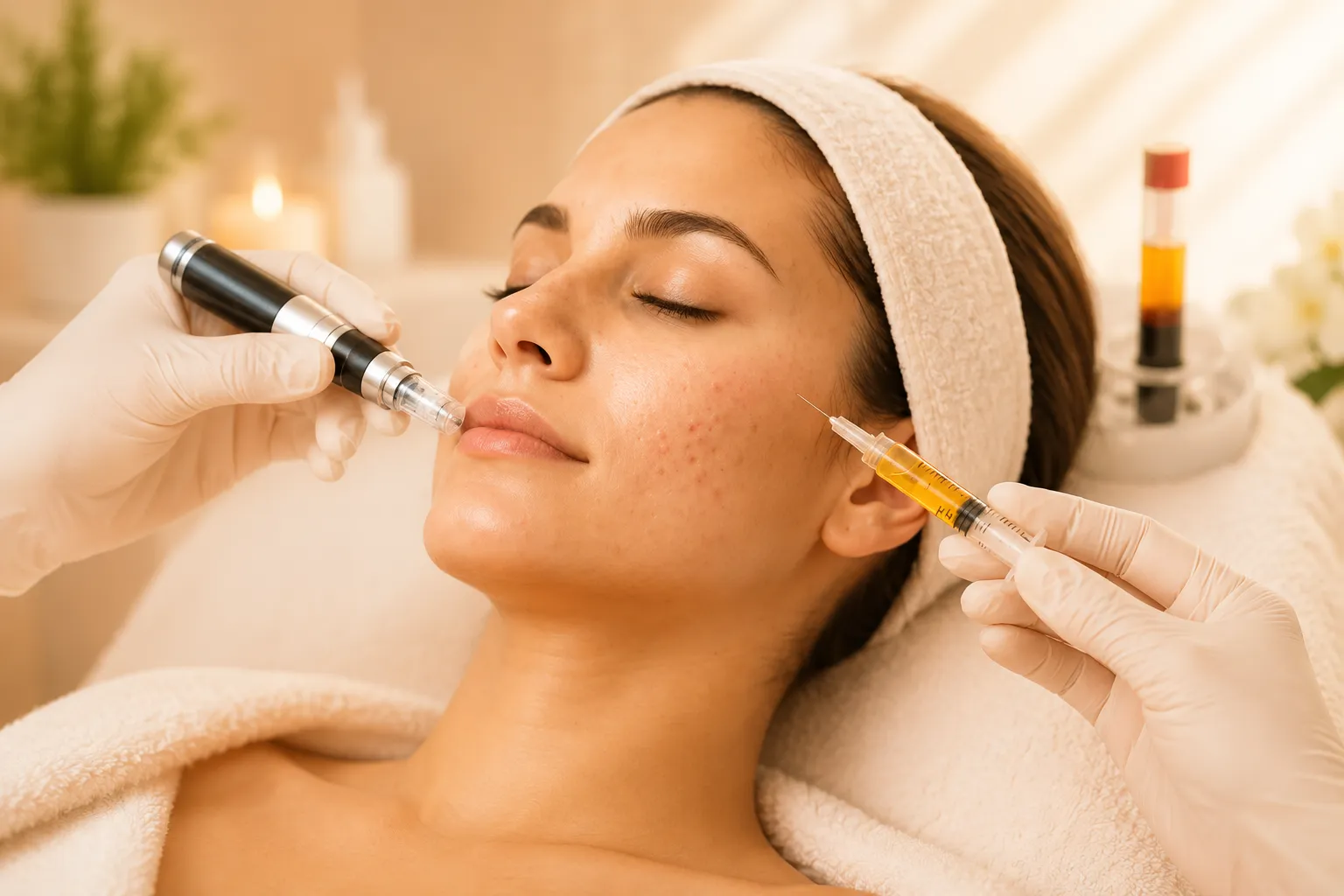
Dermatologist-Led Skin Clinic
Explore dermatologist-guided microneedling for acne scars, uneven skin texture, and enlarged pores. Your suitability and treatment plan are assessed during a consultation.
Quick Answer
Microneedling at LaShine Skin & Hair Clinic, Saravanampatti, Coimbatore uses a motorized, adjustable-depth device with fine needles (roughly 0.5mm–2.5mm) to create controlled micro-injuries that trigger your body's natural collagen production. It is most commonly used for rolling and boxcar acne scars, uneven skin texture, and enlarged pores. A typical course involves 3–6 sessions spaced 4–6 weeks apart, with redness usually lasting 24–48 hours and visible texture improvement developing over 3–6 months as collagen remodels. At LaShine, needle depth and session spacing are customized by your dermatologist according to your specific scar type and skin thickness rather than using one standard setting for every patient.
Microneedling works by creating controlled micro-injuries in the skin using a motorized, adjustable-depth device, triggering your body's own collagen production to gradually soften rolling and boxcar scars, refine texture, and improve the appearance of enlarged pores. At LaShine, needle depth and session spacing are determined by your dermatologist based on your specific scar type and skin thickness, helping ensure the treatment is tailored to your individual skin needs.
Further Reading
Adjustable-depth, motorized microneedling — chosen and calibrated for your scar type, not a fixed setting used on every patient. Here's what backs your treatment plan at LaShine.

Saravanampatti
Coimbatore
IADVL Certified Dermatologists
Every session administered or supervised by a qualified skin doctor — not a technician on autopilot.
Adjustable-Depth Device
Settings customized to your scar type and skin thickness, adjusted session to session as your skin responds.
Hygiene-First Clinic
Sterile, single-use needle cartridges for every patient, every session.
Often Combined for Deeper Scars
Layered with PRF or Exosome Therapy where it helps deeper or more established scarring.
One consultation. A session plan built for your scars.
Bring your scars to LaShine Skin & Hair Clinic, Saravanampatti, Coimbatore.
Microneedling (collagen induction therapy) uses a motorized pen device fitted with very fine needles to create thousands of controlled micro-punctures in the skin. This triggers the body's natural wound-healing response, stimulating new collagen and elastin production that gradually fills in depressed scars and improves overall skin texture.
At LaShine, this is performed with adjustable-depth, professional-grade devices — not a fixed-depth handheld tool — so your dermatologist can go deeper for rolling or boxcar scars and shallower for general texture or pore refinement, adjusting session to session as your skin responds.
This is what makes device microneedling different from a home dermaroller — adjustable depth, motorized precision, and deeper scar reach, with your dermatologist choosing the setting rather than a single default used on everyone.
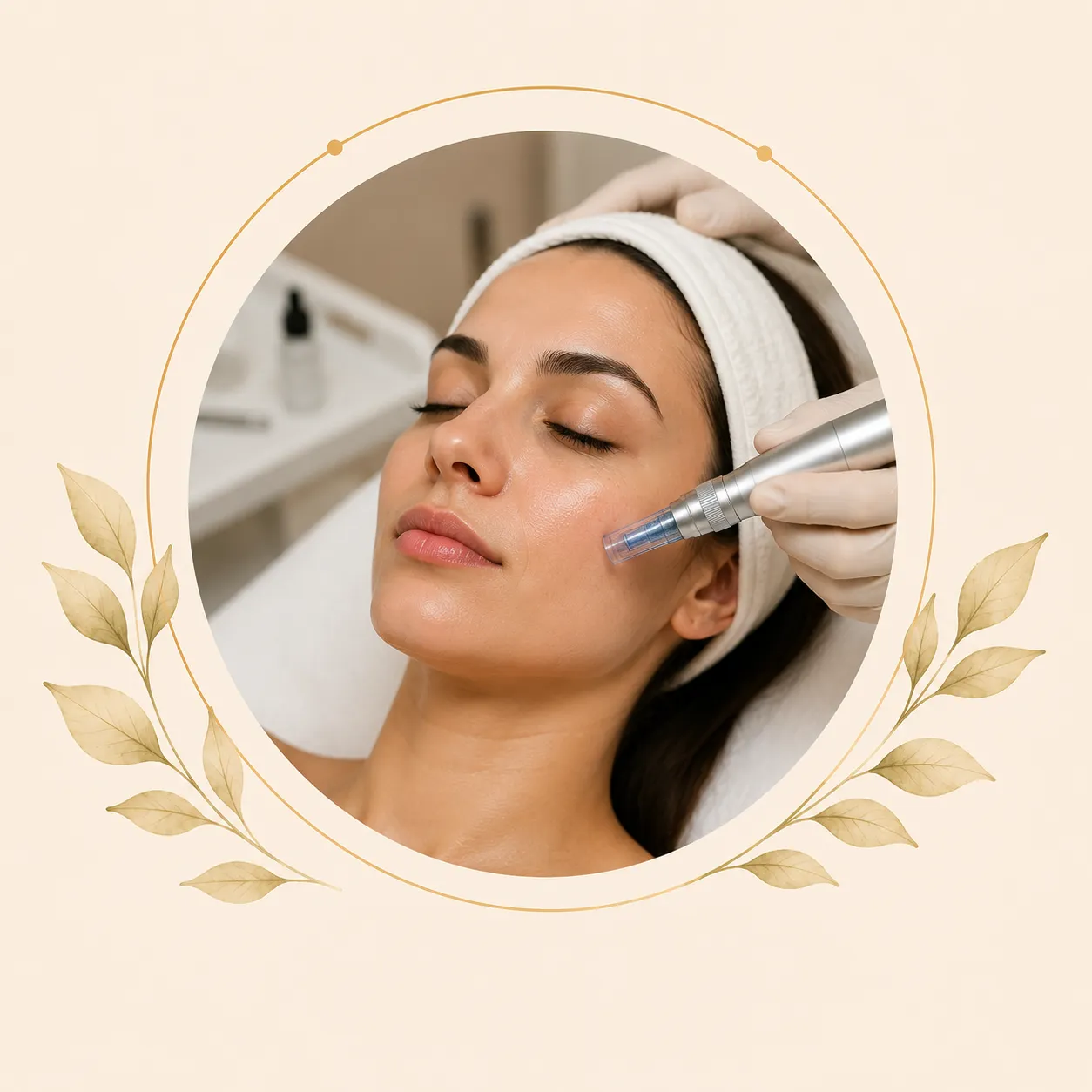
Rolling and boxcar acne scars, enlarged pores, and general texture concerns are the core candidates — especially for patients whose scarring is too shallow for laser or who've outgrown a home dermaroller.
Assessed First. Matched to Your Scar and Skin.
For deeper or more established scarring, microneedling is often layered with PRF or Exosome Therapy in the same session, rather than used alone.

Rolling / Boxcar Scars
Looking to soften depth and improve texture
Enlarged Pores & Texture
With or without visible scarring
Lower-Downtime Priority
A gentler, longer course vs. fractional laser
Outgrown a Home Dermaroller
Want professional-grade depth and precision
It Softens Scars — It Doesn’t Erase Them
Microneedling improves scar depth, but very deep icepick scars typically need TCA CROSS instead, either alone or combined with microneedling.
Active Acne or Open Wounds Need to Clear First
Active breakouts, infections, or open wounds in the treatment area need to clear before a session — needling over active inflammation can worsen outcomes.
Recent Isotretinoin Use Needs a Waiting Period
Patients on isotretinoin, or recently off it, usually need a waiting period before microneedling — this is checked at consultation.
Not a Single-Visit Fix
Results build gradually over a course of sessions and months of collagen remodeling, not after one appointment.
Keloid-Prone Skin Needs Assessment First
Any controlled skin injury carries a small risk of abnormal scarring in predisposed patients, so keloid history is checked before treatment begins.
A five-step approach at LaShine — from assessing your scar type and skin thickness to a depth setting matched to you, then scheduling your full course.
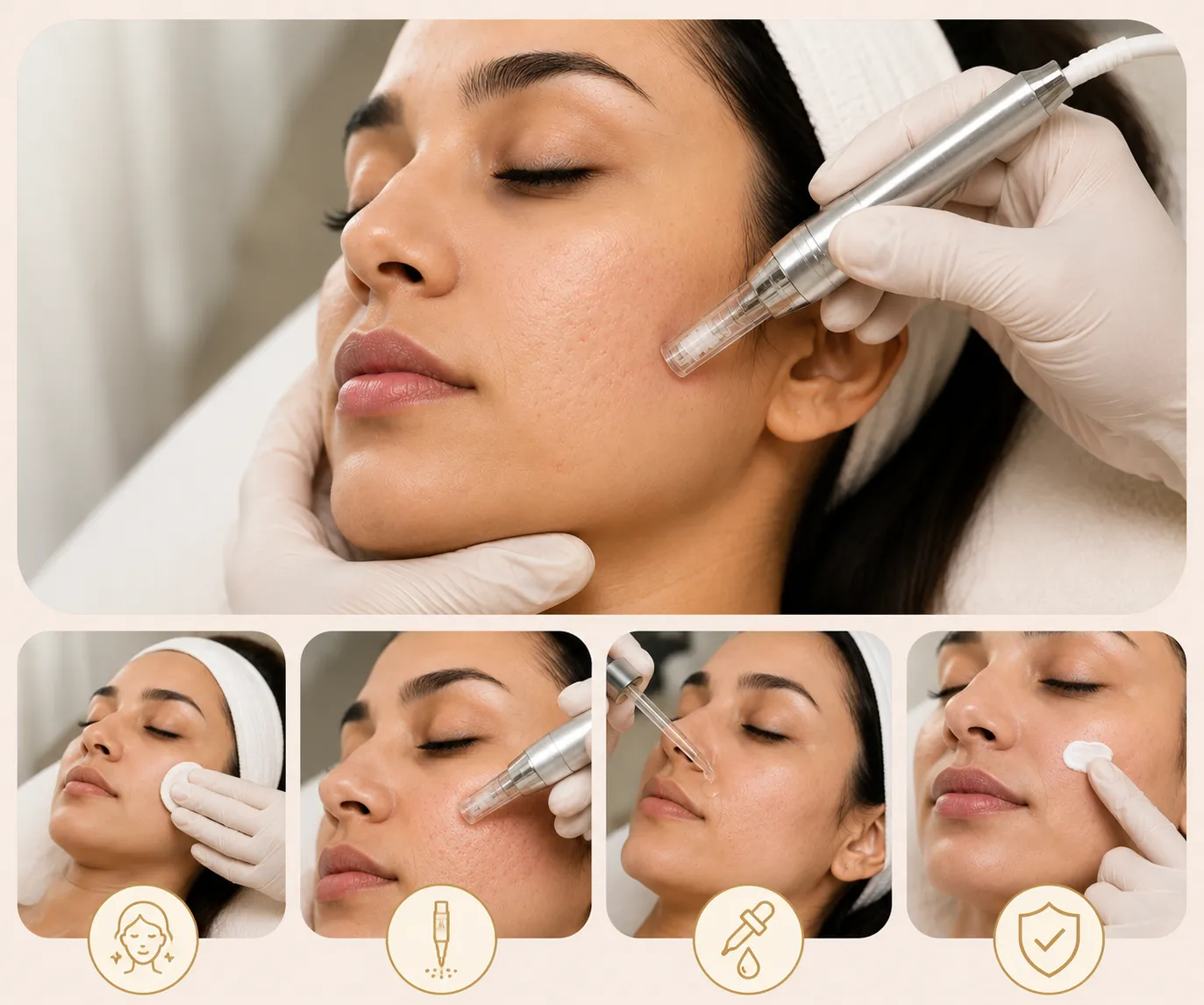
Scar & Skin Assessment
Your dermatologist examines your scar type (rolling, boxcar, or general texture), skin thickness, and any contraindications — active acne, recent isotretinoin use, keloid history — before setting a plan.
Numbing
A topical numbing cream is applied to the treatment area roughly 30–45 minutes before the session to keep the procedure comfortable.
Microneedling Pass
The motorized device is passed over the treatment area at a depth set specifically for your scar type — typically deeper for rolling/boxcar scars, shallower for general texture or pore concerns.
Regenerative Add-On (if indicated)
For deeper or more established scarring, PRF or Exosome Therapy may be layered in during the same session to support faster, better-quality healing.
Aftercare & Scheduling
Post-session skincare is applied, and your next session is scheduled 4–6 weeks out — giving your skin time to complete its healing and collagen-building phase before the next round.
A typical course is 3–6 sessions, spaced 4–6 weeks apart — deeper scarring may need more.
A realistic snapshot of the course, downtime, and results timeline for device microneedling at LaShine, then book a consultation for a plan built around your specific scars.
Typical Course
3–6 sessions, spaced 4–6 weeks apart (deeper scarring may need more)
Downtime
Redness for 24–48 hours; mild swelling can persist a little longer for deeper settings
Visible Improvement
Builds over 3–6 months as collagen remodels
Best For
Rolling and boxcar acne scars, general texture, enlarged pores
Not a Fit For
Icepick scars alone (see TCA CROSS), or active acne/infected skin at the time of treatment
Microneedling results build in layers — collagen remodeling continues for months after each session, not immediately after.

Gradual by design, not overnight.
Smoother Texture — Within Weeks
Some patients notice smoother, more even texture within a couple of weeks of a session, as the skin’s surface response begins.
Scar Depth Change — Continues for Months
The meaningful change in scar depth comes from collagen remodeling that continues for months after each session, not immediately after.
Full Course Needed for Significant Improvement
Most patients need the full course of 3–6 sessions to see significant improvement, with deeper or more longstanding scars sometimes needing more.
Final Results Judged a Few Months Later
Because collagen remodeling is a biological process, not an instant fix, final results are typically judged a few months after your last session.
Want Your Actual Timeline?
Bring your scars in and we'll map a realistic session plan — not a generic estimate.
General aftercare principles apply across every treatment in this category — see the Acne & Acne Scar Treatments hub for those. A few points specific to microneedling:

Good aftercare now, safer results ahead.
Sun Avoidance & Daily SPF
Avoid sun exposure and apply SPF 30+ daily for at least a week after each session — freshly needled skin is more vulnerable to pigmentation changes.
Skip Makeup & Actives for 48–72 Hours
Skip makeup, active ingredients (retinoids, acids), and exfoliation for 48–72 hours post-session to avoid irritating healing skin.
Only Dermatologist-Recommended Products
Use only the calming, fragrance-free products your dermatologist recommends immediately after treatment — don’t reintroduce your regular routine too soon.
Avoid Pools, Saunas & Heavy Sweating
Avoid swimming pools, saunas, and intense sweating for 24–48 hours, since freshly punctured skin is more prone to irritation and infection risk during this window.
Keep to Your Session Spacing
Going too soon irritates skin without improving results, and going too long between sessions can slow overall progress.
Questions About Aftercare?
Our team will walk you through exactly what to do between sessions.
Every microneedling treatment plan at LaShine is built and supervised by a qualified dermatologist, so your needle depth and session spacing are set for your specific scar type and skin thickness — not applied as a fixed default.

Dermatologist & Cosmetologist
Completed her MBBS and MD in Dermatology, Venereology & Leprosy, with 9 years of overall experience in collagen induction and scar-specific procedures, including device microneedling.
Needle depth isn't one-size-fits-all. I set it — and adjust it session to session — based on the patient's scar type and skin thickness, not a fixed default used on everyone.
MBBS, MD DVL
Dermatology, Venereology & Leprosy
9 Years
Overall Clinical Experience
Specialized In
Collagen Induction & Scar Procedures
Evidence-Based
Depth Calibrated to Scar & Skin
Patient-First
Personalised, Sequenced Care

Dermatology Care, IADVL Member
Completed her MBBS at Tbilisi State Medical University in 2018, and is a registered member of the Indian Association of Dermatologists, Venereologists and Leprologists (IADVL).
Device choice and needle depth for microneedling are dermatologist-controlled here, checked and adjusted at every session — that's what keeps results consistent and safe.
MBBS
Tbilisi State Medical University, 2018
Registration
134837 — Tamil Nadu Medical Council, 2019
IADVL Member
Indian Association of Dermatologists, Venereologists & Leprologists
Specialized In
Microneedling & Collagen Induction Care
Patient-First
Approach with Personalised Care
Your questions about microneedling treatment, answered by our experts. Clear answers. Real guidance.
Still Have Questions?
Speak to our dermatologist and get an honest recommendation for your scars.
Book a ConsultationDermatologist Supervised Medical-Grade Care
Most patients need 3–6 sessions spaced 4–6 weeks apart; deeper or more extensive scarring can need more. Your dermatologist gives a realistic estimate after assessing your scar type.
Pricing depends on your scar type and how many sessions your course needs, along with whether PRF or Exosome Therapy is layered in. Book a consultation for an accurate, current quote.
The collagen improvement it creates is long-lasting, but skin continues to age naturally afterward, so results aren't a permanent, unchanging state — most patients don't need repeat courses for years, though occasional touch-ups can help maintain results.
A numbing cream is applied before treatment, so most patients feel pressure or mild discomfort rather than sharp pain. Sensitivity varies by area and depth setting.
Microneedling uses a motorized, adjustable-depth device typically capable of treating deeper scarring with more precision, while Dermaroller Treatment is a lighter, hand-rolled option often used for milder texture concerns or product absorption. Your dermatologist recommends whichever suits your scar depth.
Yes — for deeper or more established scarring, microneedling is often layered with PRF or Exosome Therapy in the same session to support faster, better-quality collagen remodeling.
Your dermatologist assesses your scar type and skin, checks for any condition that would delay treatment (active acne, recent isotretinoin use), and sets your needle depth and session plan before your first treatment begins.
We're Here to Help
Not sure if microneedling suits your scar type? Book a consultation with our dermatologist today.
Explore other ways we treat acne, scars & blemishes alongside Microneedling.
Related Categories You May Also Need
Start with a full skin assessment — your dermatologist maps the right combination before recommending anything.
If you’re concerned about your skin, hair, or health, we’re here to help with expert treatment. Book a private consultation at LaShine Skin & Hair Clinic in Saravanampatti, Coimbatore. Your dermatologist can guide you through symptoms, appropriate testing, diagnosis, treatment and follow-up.
Patients visit LaShine Skin & Hair Clinic in Saravanampatti from across Coimbatore for personalised Microneedling Treatment and professional dermatologist-led care.
Looking for Microneedling Treatment near your area? You can visit our Saravanampatti clinic and speak with the dermatologist privately.
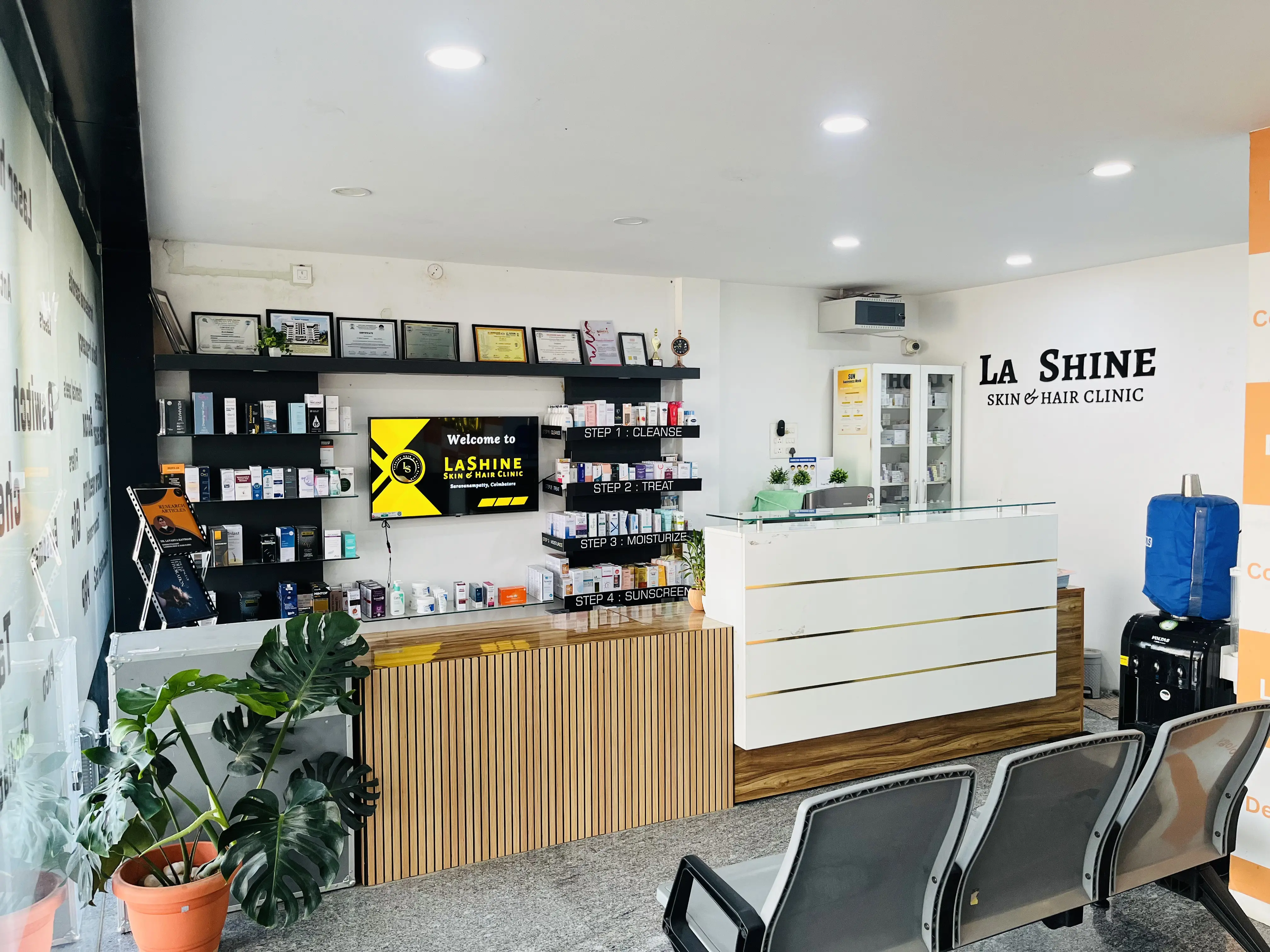
LaShine Skin & Hair Clinic
101A/3, First Floor,Sathy Rd, Amman Kovil,Saravanampatti, Coimbatore – 641035,Tamil Nadu, India
View on Google MapsYour concerns deserve private, professional care. Take the next step towards clear answers and appropriate treatment.