

Dermatologist-Led Clinical Care Dermatologist-Led Clinical Care · Saravanampatti, Coimbatore
Psoriasis Treatment in Coimbatore
Dermatologist-led management for chronic, flaring plaque psoriasis.
Quick Answer
Psoriasis is a chronic autoimmune condition in which the immune system speeds up skin cell turnover, causing thick, scaly, red plaques that flare and then partially or fully settle over time. It is not currently curable, but it is manageable — treatment combines trigger identification with topical or systemic therapy, chosen based on how much of the body is affected and how the condition is currently behaving.
What Is Psoriasis Treatment?
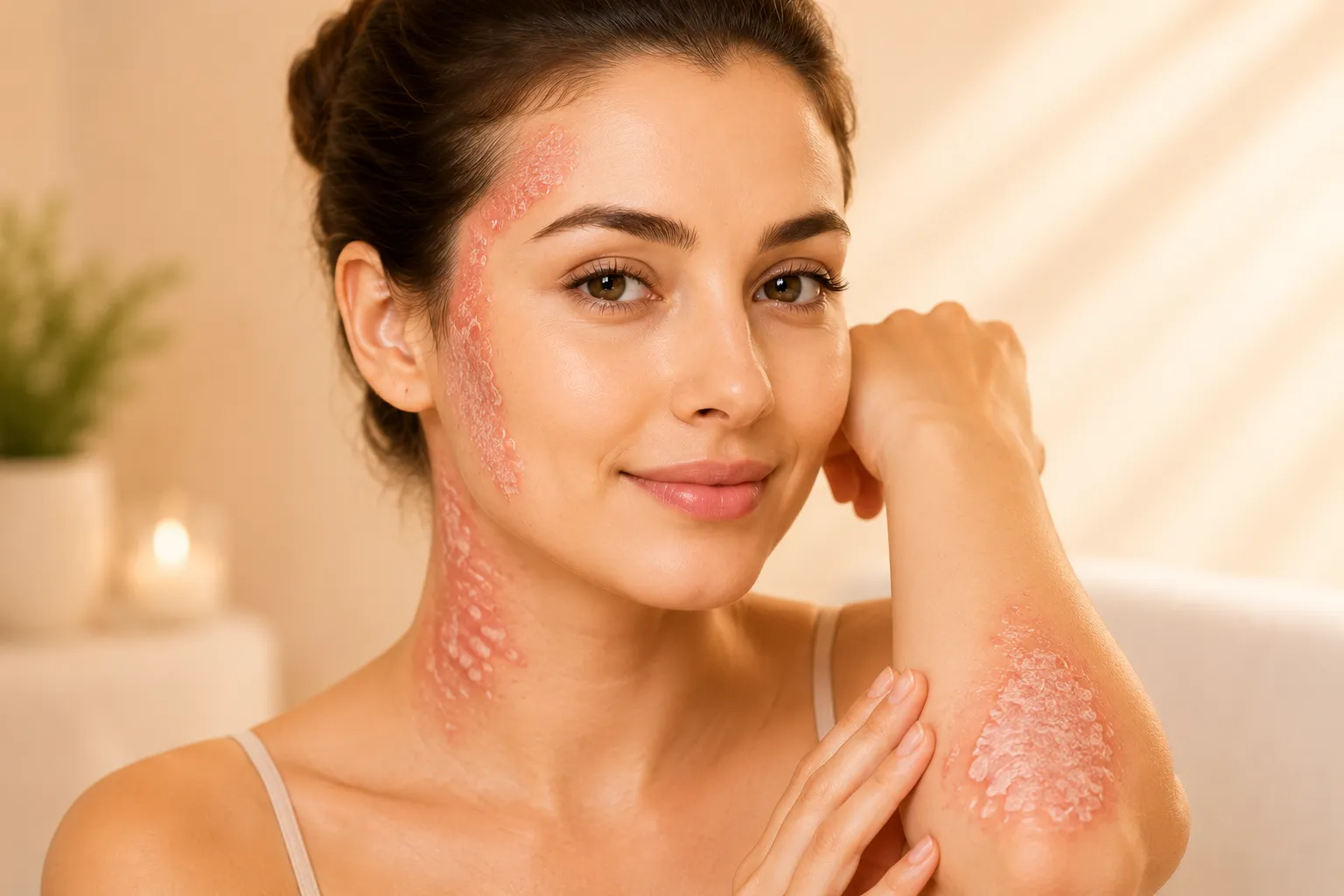
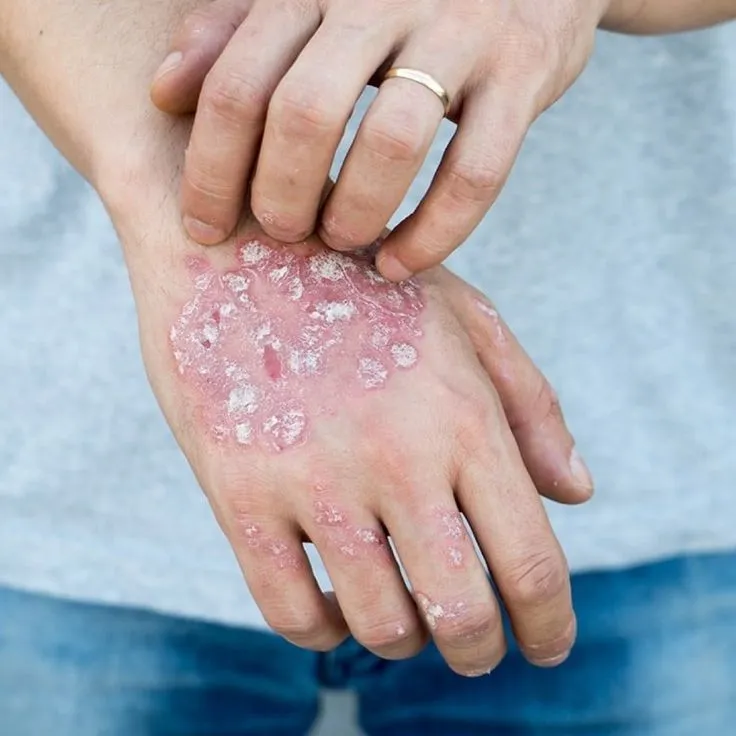
Psoriasis is a chronic autoimmune condition in which the immune system triggers skin cells to reproduce far faster than normal, resulting in thick, scaly, red plaques — commonly on the elbows, knees, scalp, and lower back, though it can appear elsewhere. It's a condition that flares and remits: symptoms can worsen for a period, then partially or fully settle, often in response to identifiable triggers such as stress, infection, certain medications, or skin injury.
Treatment isn't a one-time fix, since psoriasis is currently not curable — management combines identifying and reducing personal triggers with topical or systemic therapy matched to how extensive and active the condition currently is. At Lashine, your dermatologist tracks your specific flare pattern over time, since that history is often what points toward the most effective long-term management approach.
Psoriasis is distinct from Vitiligo — both are chronic autoimmune conditions, but psoriasis is framed around flare-and-remission and plaque presentation, while Vitiligo is framed around depigmentation and whether it's actively spreading or stable.
Who Is It Suitable For?
Thick, scaly, red patches — whether newly noticed or a long-standing diagnosis needing better control — are the core signal that this page fits your concern.
Not Sure If It's Psoriasis at All?
Eczema and certain fungal infections can look similar on the surface. Diagnosis comes first here — your dermatologist confirms what you actually have before any treatment plan is set.
Persistent or Recurring Plaques
Thick, scaly, red patches on elbows, knees, scalp, or lower back
New Diagnosis, Seeking a Plan
Recently diagnosed and looking for a management approach
More Frequent or Severe Flares
An existing diagnosis that has become harder to control
Wanting Trigger Identification
Reducing flare frequency, not just treating each flare as it happens
Why Patients Choose Lashine for Psoriasis Care
A trigger-aware, long-term management plan — not just treatment for whichever plaque is visible today. Here's what backs your psoriasis care at Lashine.

Saravanampatti
Coimbatore
IADVL Certified Dermatologists
Every psoriasis plan reviewed by a qualified, credentialed skin doctor.
Trigger-Aware Management
Flare pattern and personal triggers assessed together, not treated as separate concerns.
Hygiene-First Clinic
Medical-grade sterilization for every procedure.
Saravanampatti, Coimbatore
Easy access and flexible slots for ongoing, long-term review appointments.
One consultation. A realistic, trigger-aware management plan.
Bring your flare history to Lashine Skin & Hair Clinic, Saravanampatti, Coimbatore.
Who Should Be Cautious, or Know the Limits
Not Currently Curable
Treatment manages flares and extends periods of remission rather than eliminating the condition.
Systemic Treatments Need Monitoring
Certain systemic treatments require monitoring for side effects and are not suitable for every patient — this is assessed individually.
Skin Injury Can Trigger New Patches
Scratching or picking at plaques can trigger new patches at the injury site — a phenomenon patients should be aware of.
Pregnancy & Breastfeeding Need Individual Assessment
Some patients need modified treatment during pregnancy or while breastfeeding — this gets sorted out at consultation, not assumed either way.
Reduced Frequency Is the Realistic Goal
Patients expecting flares to stop entirely and permanently should understand that reduced frequency and severity, not complete elimination, is the realistic goal for most patients.
How We Approach Psoriasis, Step by Step.
A five-step approach at Lashine — from confirming the diagnosis to reviewing your flare history, planning treatment, managing triggers, and ongoing review.
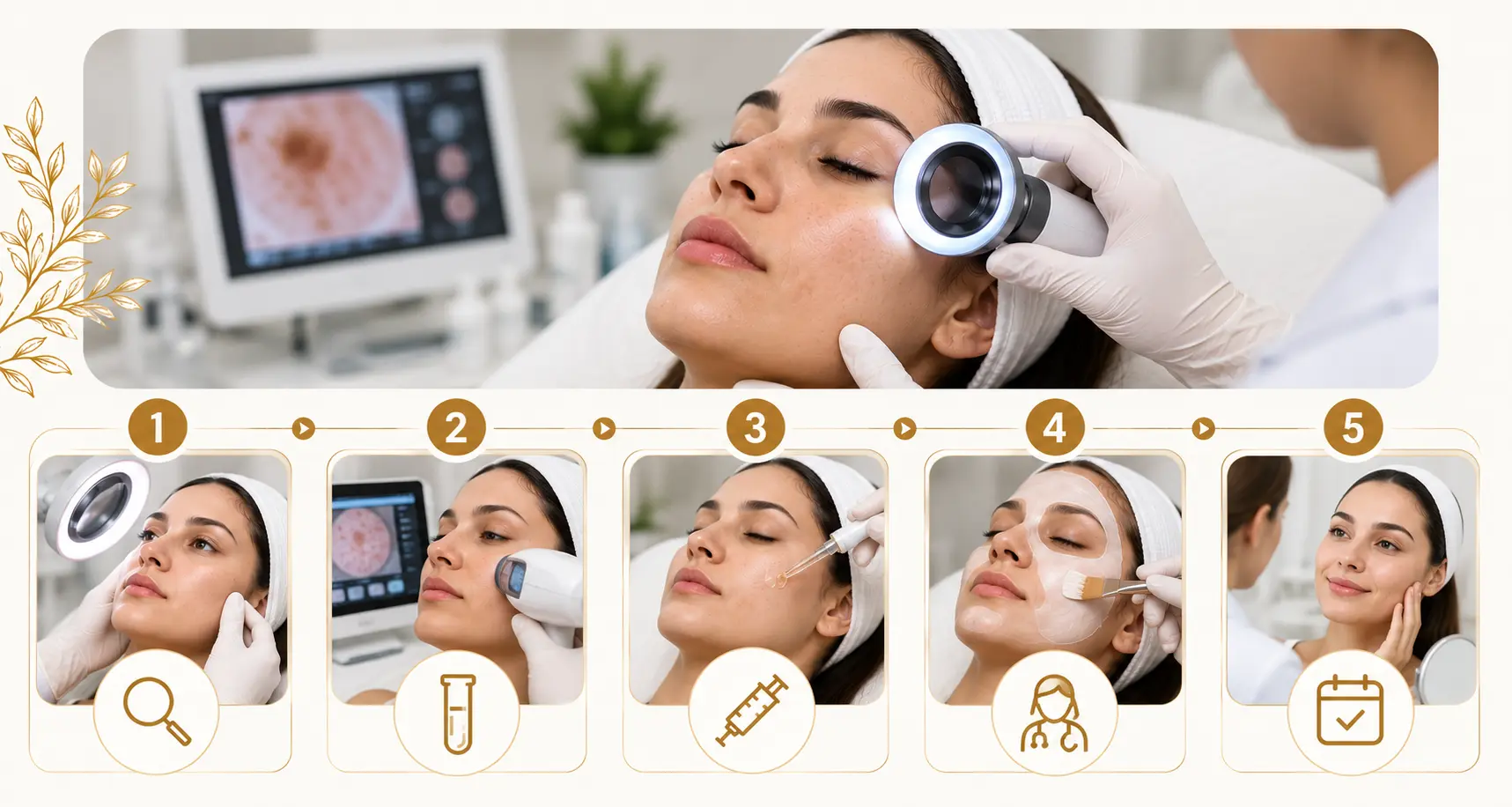
Confirming It’s Psoriasis
Your dermatologist looks closely at the plaques to rule out eczema and certain fungal infections, both of which can present in a broadly similar way.
Flare History & Trigger Review
Your flare pattern, frequency, and possible triggers (stress, infection, medication, skin injury) are reviewed to inform both current treatment and future prevention.
Treatment Plan
Topical therapy, systemic treatment, or a combination is planned based on how extensive and active your psoriasis currently is.
Trigger Management
Alongside active treatment, personal triggers are addressed where identifiable, since reducing trigger exposure is often as important as the treatment itself for long-term flare control.
Ongoing Review
Regular review continues over the long term to track flare frequency, treatment response, and any need for plan adjustment.
This is ongoing, review-based management — not a fixed number of visits with a defined end point.
What to Expect, At a Glance
A quick reference for how psoriasis management unfolds — book a consultation for a plan built around your specific flare pattern.
Typical Course
Ongoing, review-based management rather than a fixed number of visits
Downtime
None to minimal, depending on treatment used
Best For
Confirmed psoriasis, whether newly diagnosed or an established flare pattern needing better control
Not a Fit For
Patients expecting a permanent cure or complete elimination of future flares
Realistic Results & Timeline.
Psoriasis management is measured over months, through consistent trigger management and treatment adherence, rather than being something that's "finished" after one course.

Managed over time, not "finished."
Flares Begin Settling — Days to a Few Weeks
Most psoriasis flares begin to settle within days to a few weeks of starting appropriate treatment, though the pace depends on how extensive the flare is and which treatment approach is used.
Focus Shifts to Time Between Flares
Longer-term, the goal shifts from treating one flare to extending the time between flares and reducing their severity when they do occur.
Measured in Months, Not One Course
This is measured over months, through consistent trigger management and treatment adherence, rather than being something that’s "finished" after one course.
Trigger Management Stays Ongoing
Identifying and managing personal triggers alongside treatment is what supports longer remission periods over time.
Managing Flares Between Visits.
A few consistent habits between review appointments make a measurable difference to flare frequency and severity.

Consistency now, fewer flares later.
Follow Prescribed Treatment Consistently
Continue topical or systemic treatment as directed, even once plaques start to settle — stopping early is a common reason flares return sooner.
Avoid Scratching or Picking at Plaques
Skin injury can trigger new patches at the injury site.
Identify and Manage Personal Triggers
Stress, certain medications, skin injury, and infection are common triggers to work through alongside active treatment.
Avoid Unverified Creams on New Patches
Applying a random leftover cream — including anyone else’s prescription — to a new patch before it’s been looked at can mask the real picture and delay the right diagnosis.
Keep to Your Review Schedule
This applies even during periods of remission, since early re-intervention during a new flare is more effective than waiting.
Questions About Managing a Flare?
Our team will walk you through exactly what to do between your review appointments.
Clinical Care. Trigger-Aware Management.
Every psoriasis plan at Lashine is reviewed by a qualified, credentialed dermatologist, so your management plan is built around your confirmed diagnosis, flare history, and personal triggers — not a standard protocol applied to every patient.

Dr. Shabari A, MBBS, MD DVL
Dermatologist & Cosmetologist
Completed her MBBS and MD in Dermatology, Venereology & Leprosy, with 9 years of overall experience in chronic autoimmune skin condition management, including psoriasis.
Psoriasis doesn't behave the same way in every patient. My job is to understand each patient's specific flare pattern and likely triggers, so the plan addresses what's setting off flares, not just the plaques each time they appear.
MBBS, MD DVL
Dermatology, Venereology & Leprosy
9 Years
Overall Clinical Experience
Specialized In
Chronic Autoimmune Skin Conditions
Evidence-Based
Trigger-Aware, Individualized Plans
Patient-First
Long-Term, Reviewed Management

Dr. Lavanya Kavimani, MBBS
Dermatology Care, IADVL Member
Completed her MBBS at Tbilisi State Medical University in 2018, and is a registered member of the Indian Association of Dermatologists, Venereologists and Leprologists (IADVL).
Confirming it's psoriasis, and not eczema or a fungal infection that looks similar, is the first step — the right long-term management approach depends on getting that diagnosis right from the start.
MBBS
Tbilisi State Medical University, 2018
Registration
134837 — Tamil Nadu Medical Council, 2019
IADVL Member
Indian Association of Dermatologists, Venereologists & Leprologists
Specialized In
Psoriasis & Chronic Skin Condition Care
Patient-First
Approach with Personalised Care
Is Psoriasis Contagious? Understand the Triggers & Treatment.
Watch Dr. Shabari Arumugam explain psoriasis symptoms, myths, and management in 50 seconds.

- Not Contagious or Spreadable
- Chronic Inflammatory Condition
- Stress & Triggers Can Worsen Flares
- Manageable with Medical Care

Dr. Shabari ArumugamDermatologist, MD (DVL)
Frequently Asked Questions
Your questions about psoriasis treatment, answered by our experts. Clear answers. Realistic guidance.
Still Have Questions?
Speak to our dermatologist and get a realistic view of your flare pattern.
Book a ConsultationDermatologist Supervised Medical-Grade Care
No, psoriasis is not currently curable. It is managed over the long term, with treatment aimed at controlling flares and extending periods of remission.
Common triggers include stress, infections, certain medications, and skin injury (including scratching or cuts). Triggers vary by patient, which is why identifying your own pattern is part of long-term management.
No. Psoriasis is an autoimmune condition, not an infection, and cannot be transmitted through contact with another person.
Yes. Psoriasis occurs when the immune system triggers skin cells to reproduce far faster than normal, leading to the buildup that forms characteristic plaques.
Psoriasis treatment depends on the severity, extent, and activity of the condition, as well as your medical history and individual needs. Options may include topical treatments and, where clinically appropriate, systemic therapies. Your dermatologist can assess your condition and discuss suitable options based on your symptoms and treatment history.
With appropriate treatment, most flares begin settling within days to a few weeks, though this varies by severity and treatment approach. Untreated or inconsistently treated flares often persist longer.
Whether your plan uses topical or systemic treatment, and for how long, is what drives the number — you'll get that worked out at consultation rather than a rate given upfront.
We're Here to Help
Dealing with recurring scaly, red patches? Book a consultation with our dermatologist today.
Related Treatments
Explore other ways we treat clinical dermatology alongside Psoriasis Treatment.
Related Categories You May Also Need
Not sure what's causing your skin condition?
Start with a full skin assessment — your dermatologist maps the right combination before recommending anything.
Dealing With Recurring Scaly, Red Patches?
If you’re concerned about your skin, hair, or health, we’re here to help with expert treatment. Book a private consultation at LaShine Skin & Hair Clinic in Saravanampatti, Coimbatore. Your dermatologist can guide you through symptoms, appropriate testing, diagnosis, treatment and follow-up.
Psoriasis Treatment Care Across Coimbatore
Patients visit LaShine Skin & Hair Clinic in Saravanampatti from across Coimbatore for personalised Psoriasis Treatment and professional dermatologist-led care.
- Saravanampatti
- Vilankurichi
- Kalapatti
- Peelamedu
- Gandhipuram
- RS Puram
- Ganapathy
- Thudiyalur
- Sathy Road
- Avinashi Road
Looking for Psoriasis Treatment near your area? You can visit our Saravanampatti clinic and speak with the dermatologist privately.

LaShine Skin & Hair Clinic
101A/3, First Floor,Sathy Rd, Amman Kovil,Saravanampatti, Coimbatore – 641035,Tamil Nadu, India
View on Google MapsYour concerns deserve private, professional care. Take the next step towards clear answers and appropriate treatment.