

Key Takeaways
- Skin and hair problems can have different causes, so the first step is understanding the problem before choosing treatment.
- Not every skin or hair problem needs a separate test; many can be assessed through a dermatologist's examination.
- Dermoscopy can provide a closer look at certain moles, spots and other skin changes.
Skin and Hair Diagnostics: A Simple Guide for Patients
Skin and hair problems can sometimes look similar, even when the reasons behind them are different. Skin and hair diagnostics help a dermatologist understand what may be causing a skin, scalp or hair problem and decide what kind of care may be suitable.
You may not always need a separate test. In many cases, a doctor can learn a lot by looking closely at your skin or scalp, asking about your symptoms and understanding how the problem started.
How Are Skin Problems Checked?
When you visit a dermatologist for a skin problem, the first step is usually a careful examination.
The doctor may ask:
- When did the skin problem start?
- Has it become better or worse?
- Is there itching, pain or irritation?
- Have you used any creams or medicines?
- Has the colour, size or appearance of the area changed?
- Have you noticed similar changes anywhere else?
The doctor will then look closely at the affected area. This can help them understand whether the problem may be related to irritation, infection, pigmentation, acne, a mole, or another skin concern.
Not every skin problem needs a special test.
What Is a Skin Diagnostic Test?
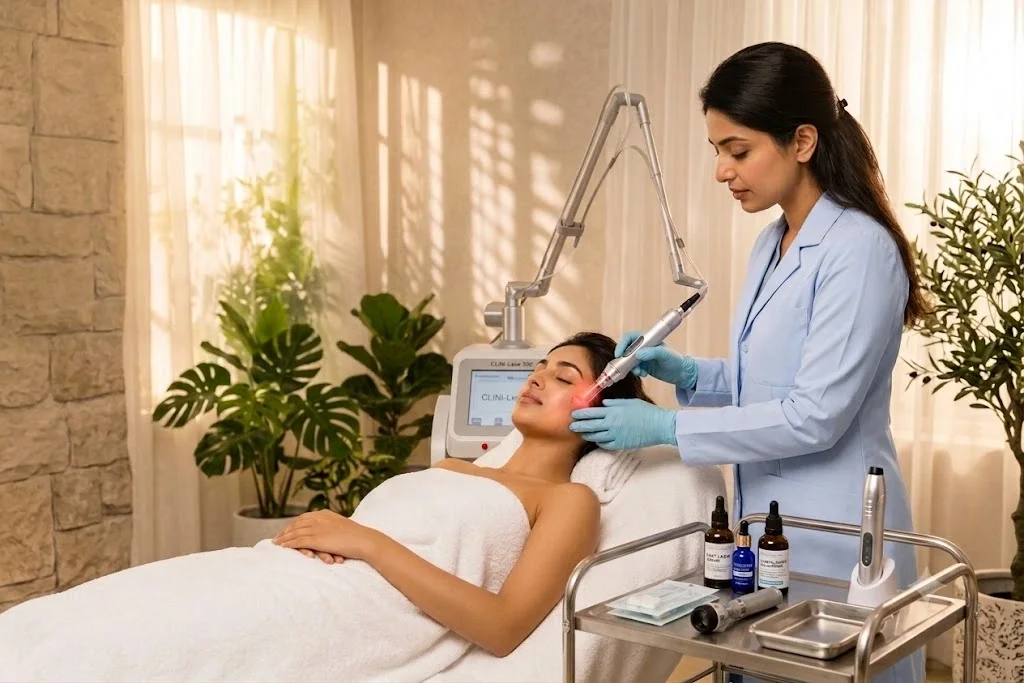
A skin diagnostic test is an examination that can give a doctor more information about a skin problem when a normal examination is not enough.
The type of examination depends on what the doctor sees and what you are experiencing. There is no single test that is suitable for every skin problem.
For some concerns, the doctor may simply examine the skin carefully. For others, a closer look may be helpful.
What Is Dermoscopy?
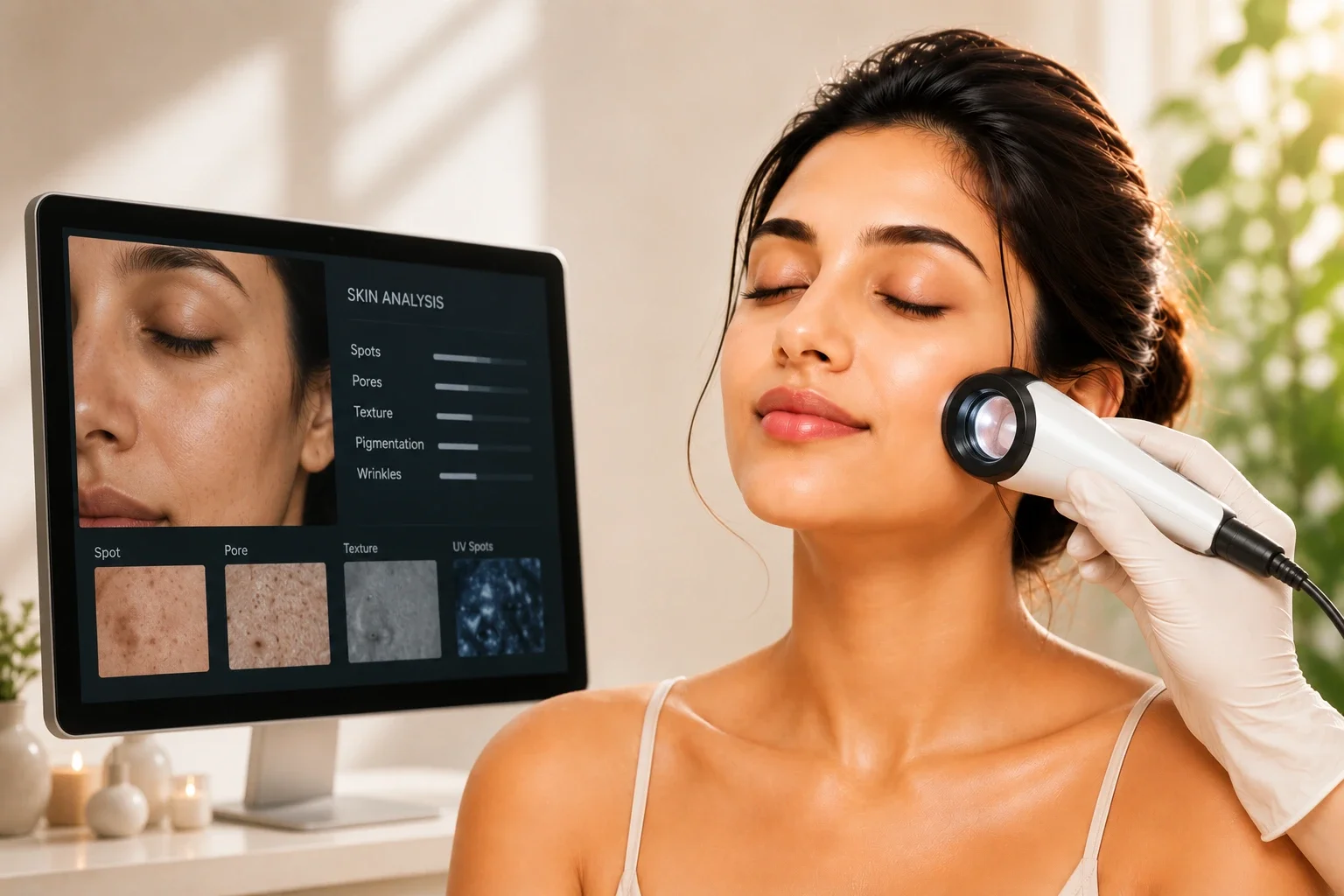
Dermoscopy is a closer examination of the skin using a special device that helps the doctor see details that may not be easy to see with the naked eye.
It can be useful when checking certain moles, spots and other skin changes.
If you have noticed a new or changing mole or spot, a dermatologist can decide whether a closer examination such as dermoscopy would be useful.
You can learn more about this examination on our Dermoscopy (Skin/Mole Check) page.
How Are Hair and Scalp Problems Checked?
Hair loss and scalp problems can happen for many different reasons. A dermatologist may first look at your hair and scalp and ask questions about your hair loss.
They may ask:
- When did the hair loss begin?
- Are you losing hair from one area or from several areas?
- Are you noticing more hair while bathing or combing?
- Has your hair become thinner?
- Do you have scalp itching, flakes or irritation?
- Have you recently experienced any major changes in your health or daily life?
- Does hair loss run in your family?
The doctor can then decide whether you need a closer scalp and hair examination.
What Is a Hair Diagnosis Test?
There is no single hair diagnosis test that is needed for everyone with hair loss.
The examination depends on the type of hair problem you have. A doctor may carefully examine your scalp and hair and, when needed, use a closer examination to understand the problem better.
This is why it is better to find the possible reason for hair loss before choosing a treatment.
What Is Trichoscopy?
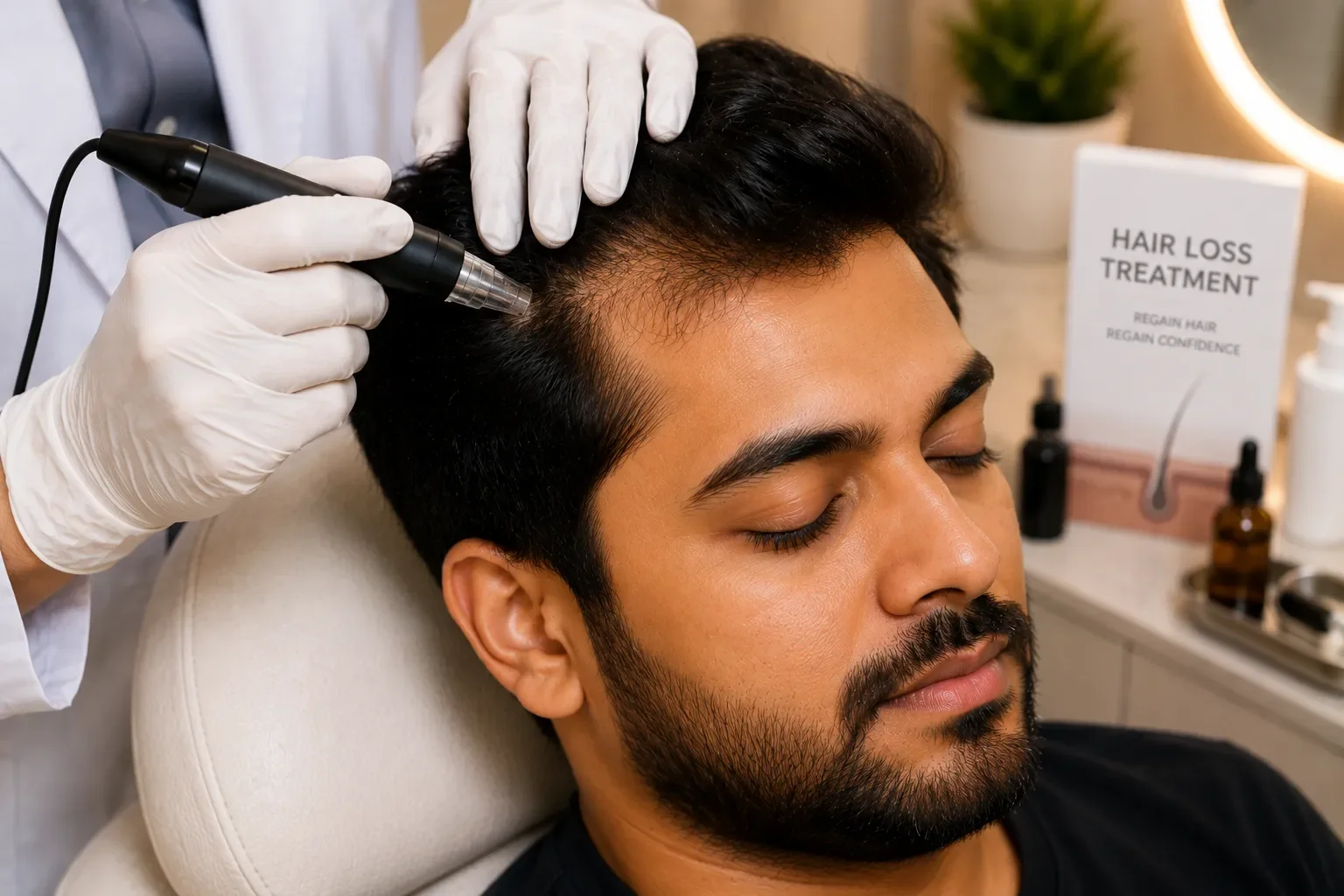
Trichoscopy is a closer examination of the scalp and hair. It allows the doctor to look more carefully at the hair and scalp than they can with a normal examination.
It may help when someone has hair thinning, excessive hair shedding, patchy hair loss or other scalp concerns.
If you are experiencing ongoing hair loss or changes in your scalp, your dermatologist can decide whether trichoscopy may be helpful.
You can learn more about Trichoscopy (Scalp Analysis) through our dedicated treatment page.
Do All Skin and Hair Problems Need Tests?
No.
Many common skin and hair problems can be assessed during a consultation and careful examination. A separate examination is recommended only when the doctor feels that it can provide useful information.
The right approach depends on your symptoms, how long you have had the problem and what the doctor finds during the examination.
When Should You See a Dermatologist?
Consider seeing a dermatologist if you have:
- A skin problem that does not improve
- A mole or spot that is changing
- A new or unusual skin change
- Sudden or noticeable hair loss
- Increasing hair thinning
- Persistent scalp itching or flaking
- Hair loss affecting a particular area
- A skin or scalp problem that keeps coming back
Getting the problem checked early can help you understand what is happening instead of trying different treatments without knowing the cause.
Skin and Hair Diagnostics in Coimbatore
If you are concerned about a skin, scalp or hair problem, a dermatologist can first understand your symptoms and examine the affected area.
Depending on your concern, a closer examination such as dermoscopy for skin and mole concerns or trichoscopy for scalp and hair concerns may be considered.
The goal is simple: understand the problem first, then choose the right care for your skin or hair.
Frequently Asked Questions