

- Typical Course: 3–4 sessions, spaced 4–8 weeks apart
- Downtime: 5–7 days (redness, peeling)
- Pigmentation Risk: Higher on darker skin tones if uncalibrated
- Best For: Boxcar/deep rolling scars, faster visible change
- Not a Fit For: Icepick scars alone, active acne, low downtime tolerance
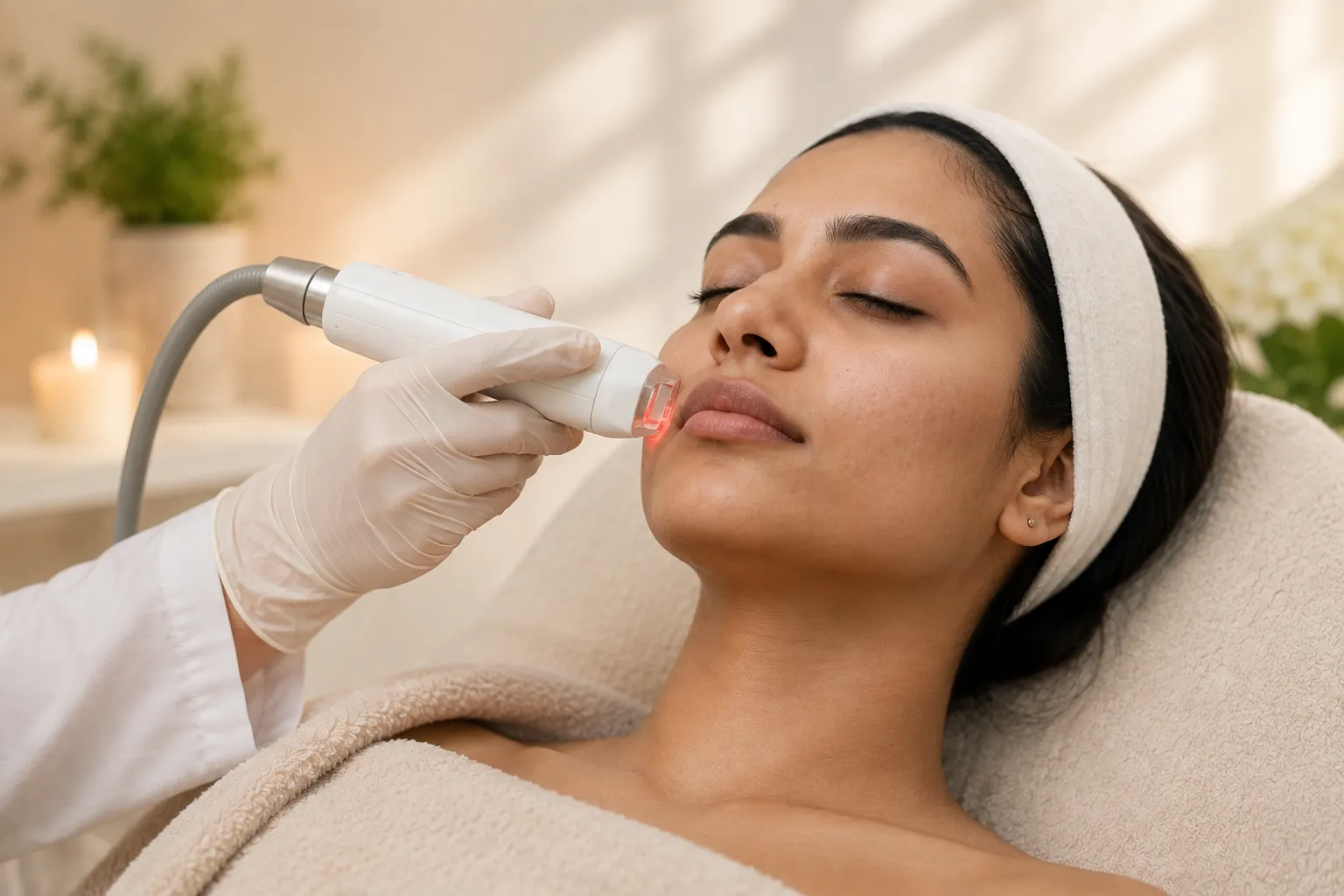
Dermatologist-Led Skin Clinic
Acne Scar Laser Treatment in Coimbatore
Explore laser treatment options for acne scars and uneven skin texture. A consultation helps determine which approach may suit your skin and concerns.
- Personalized Treatment Planning
Quick Answer
Acne scar laser treatment at LaShine Skin & Hair Clinic, Saravanampatti, Coimbatore uses fractional CO2 laser or MNRF (microneedling radiofrequency) for boxcar and deep rolling acne scars, chosen based on scar depth and skin tone. CO2 laser gives faster, more pronounced results but needs 5–7 days of downtime and carries a higher pigmentation risk on darker skin; MNRF has next-day recovery and a better safety profile for Indian skin tones, working more gradually. A typical course is 3–4 sessions, spaced roughly 4–8 weeks apart.
Both fractional CO2 laser and MNRF are effective, clinically studied options for boxcar and deep rolling acne scars — but they behave differently on Indian skin. CO2 laser gives faster, more pronounced results but carries longer downtime and a higher pigmentation risk on darker skin tones; MNRF works more gradually with less downtime and a better pigmentation safety profile. Your dermatologist selects between the two — or combines them with other procedures — based on your scar depth, skin tone, and how much downtime you can realistically manage.
Trust Badges / Quick Proof 
Why Patients Choose LaShine for Scar Laser
Two effective laser technologies exist for boxcar and deep rolling scars — the choice between them, calibrated for your skin, is what determines the outcome. Here's what backs your treatment plan at LaShine.
Saravanampatti
Coimbatore
01
IADVL Certified Dermatologists
Every laser session administered or supervised by a qualified skin doctor — not a technician on autopilot.
02
Two Modalities Available
CO2 laser and MNRF, chosen per scar type and skin — not a single device applied to every patient.
03
Indian-Skin-Tone Calibrated
Settings adjusted for Fitzpatrick IV–VI skin, common across Tamil Nadu, to manage pigmentation risk.
04
Hygiene-First Clinic
Medical-grade sterilization for every laser and MNRF procedure.
One consultation. The right laser, chosen for your scars.
Bring your scars to LaShine Skin & Hair Clinic, Saravanampatti, Coimbatore.
Two Technologies, One Goal Get Your Scars Assessed
What Is Acne Scar Laser Treatment?
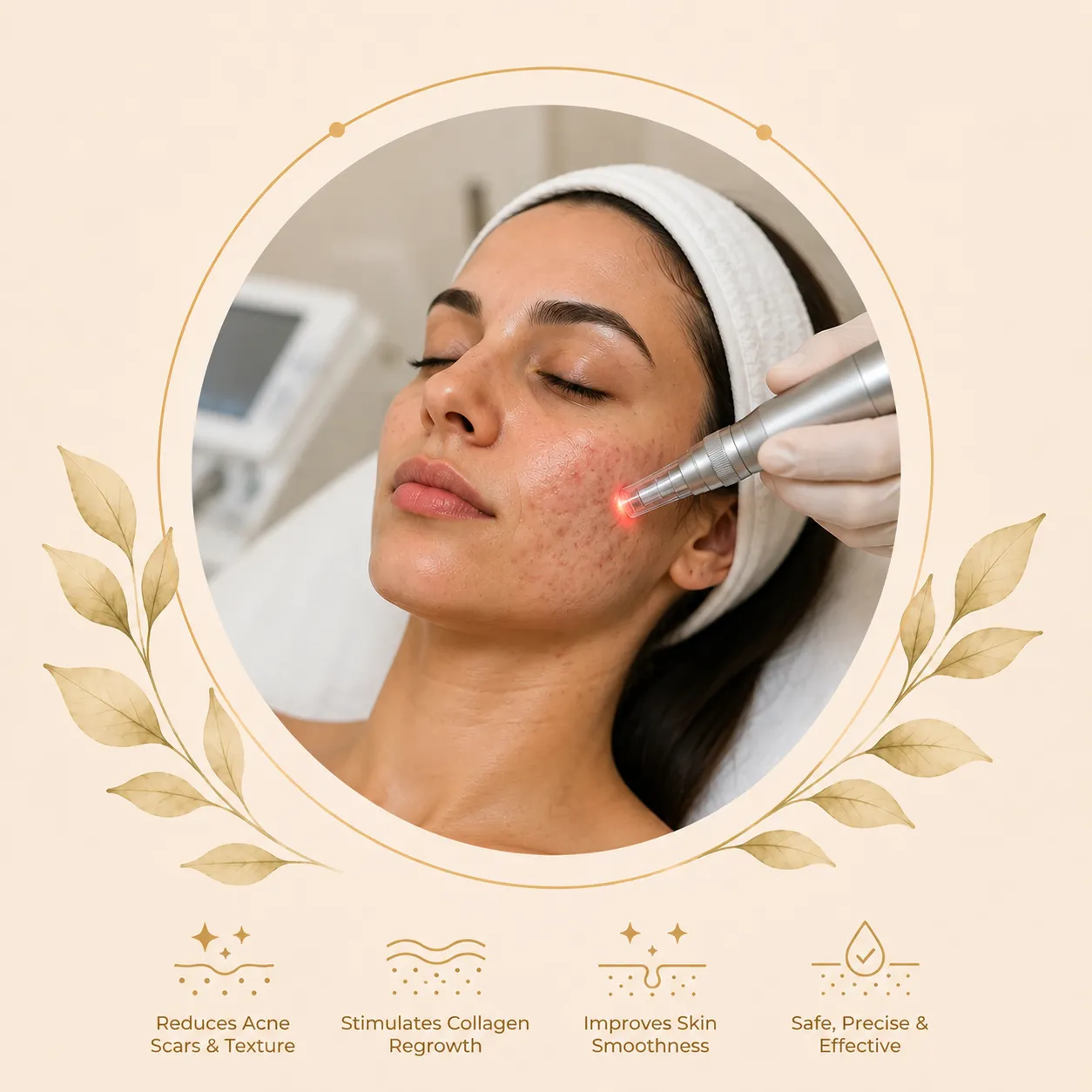
Acne scar laser treatment at LaShine uses one of two energy-based technologies — fractional CO2 laser or MNRF — to trigger collagen remodeling deep in the skin, improving the depth and appearance of boxcar and deep rolling scars.
Fractional CO2 laser resurfaces skin using thousands of tiny laser columns, physically removing and regenerating targeted areas of tissue. MNRF instead delivers radiofrequency energy through insulated microneedles, stimulating collagen in the deeper layers of skin without ablating the surface — which is why its downtime and pigmentation risk profile differ from CO2's.
Fractional CO2 LaserResurfaces skin directly for faster, more visible change
Boxcar ScarsDeep Rolling ScarsFaster Results
MNRFMicroneedling radiofrequency for a gentler recovery
Boxcar ScarsDeep Rolling ScarsLower Pigmentation Risk
Choosing between them isn't about one being universally "better" — CO2 laser typically gives faster, more visible change per session, while MNRF offers a gentler recovery and lower pigmentation risk, which matters more on darker Fitzpatrick skin types common in South India.
CO2 Laser
MNRF
Matched to Your Scars, Not a Default
Who Is It Suitable For?
Boxcar and deep rolling scars that haven't responded fully to microneedling alone are the core candidates — the choice between CO2 laser and MNRF then comes down to your downtime tolerance and skin tone.
Assessed First. Matched to Your Scar and Skin.
Patients whose scarring includes a mix of depths are often combined with Microneedling, Acne Scar Subcision, or TCA CROSS for a fuller result, rather than laser alone.
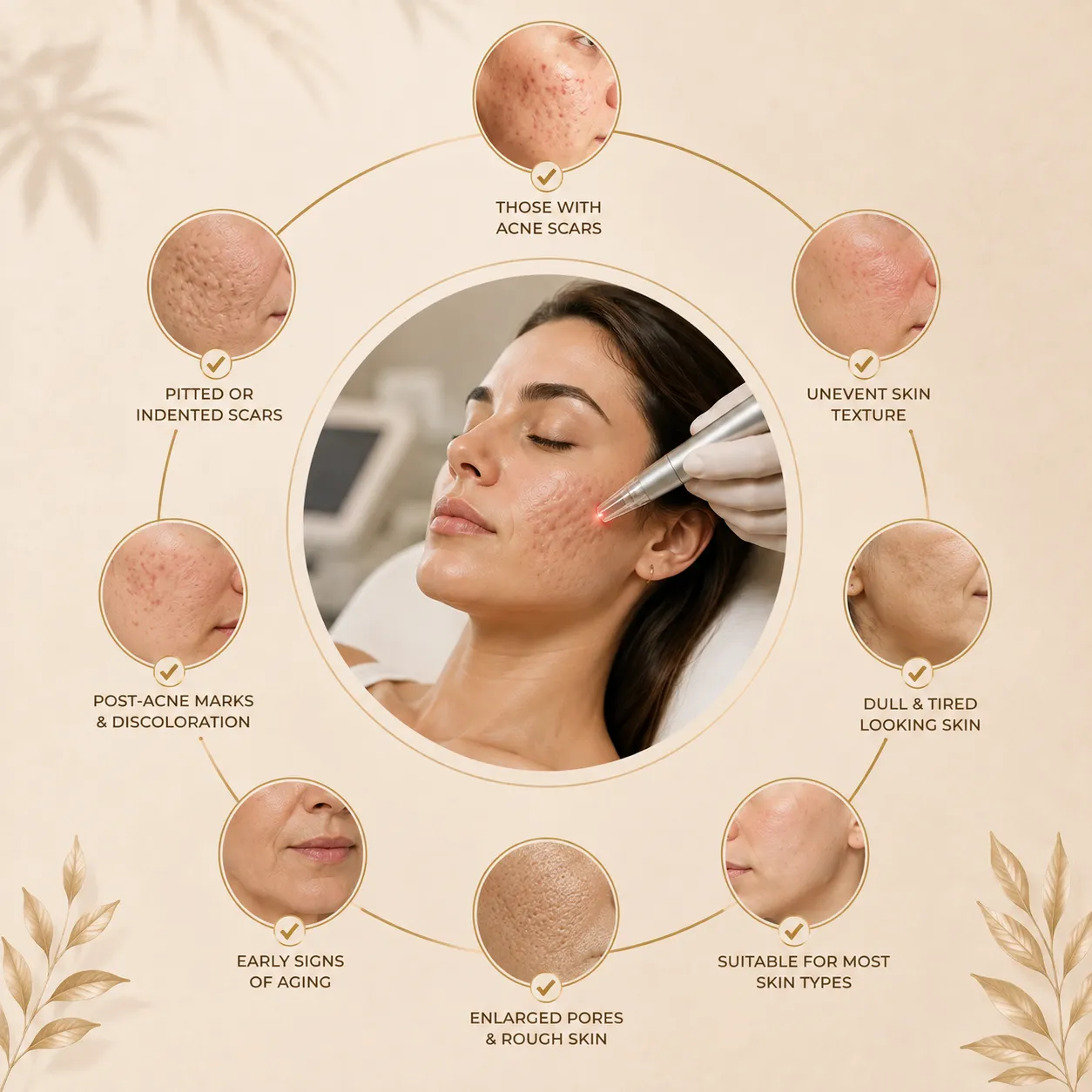
Boxcar / Deep Rolling Scars
Scars that haven't responded fully to microneedling alone
Want Faster Results
Able to plan for CO2 laser’s longer downtime for more visible change
Minimal Downtime Priority
MNRF is typically the better starting point for lower pigmentation risk
Darker Fitzpatrick Skin Tones
Want a treatment specifically calibrated for pigmentation safety
IADVL Certified Dermatologists
CO2 Laser & MNRF
Fitzpatrick-Calibrated Settings
Hygiene-First Clinic
10000+ Patients Treated
Saravanampatti, Coimbatore
Set the Right Expectations
Who Should Be Cautious, or Know the Limits
Icepick Scars Respond Poorly to Laser Alone
TCA CROSS is the more effective option for that specific scar type, and is often combined with laser for mixed scarring.
Active Acne Needs to Be Under Control First
Treating over active inflammation raises the risk of complications and uneven results.
Pigmentation Risk on Darker Skin Tones
Fractional CO2 laser carries a higher risk of post-inflammatory hyperpigmentation if settings aren’t calibrated correctly — this is why device choice and parameters are dermatologist-controlled, not standardized across all patients.
Recent Isotretinoin, Infections & Keloid History
These need dermatologist assessment before either modality — CO2 laser or MNRF — is used.
Not a Single-Session Fix
Results build over a full course of sessions and months of collagen remodeling afterward, regardless of which laser is used.
Our Treatment Approach 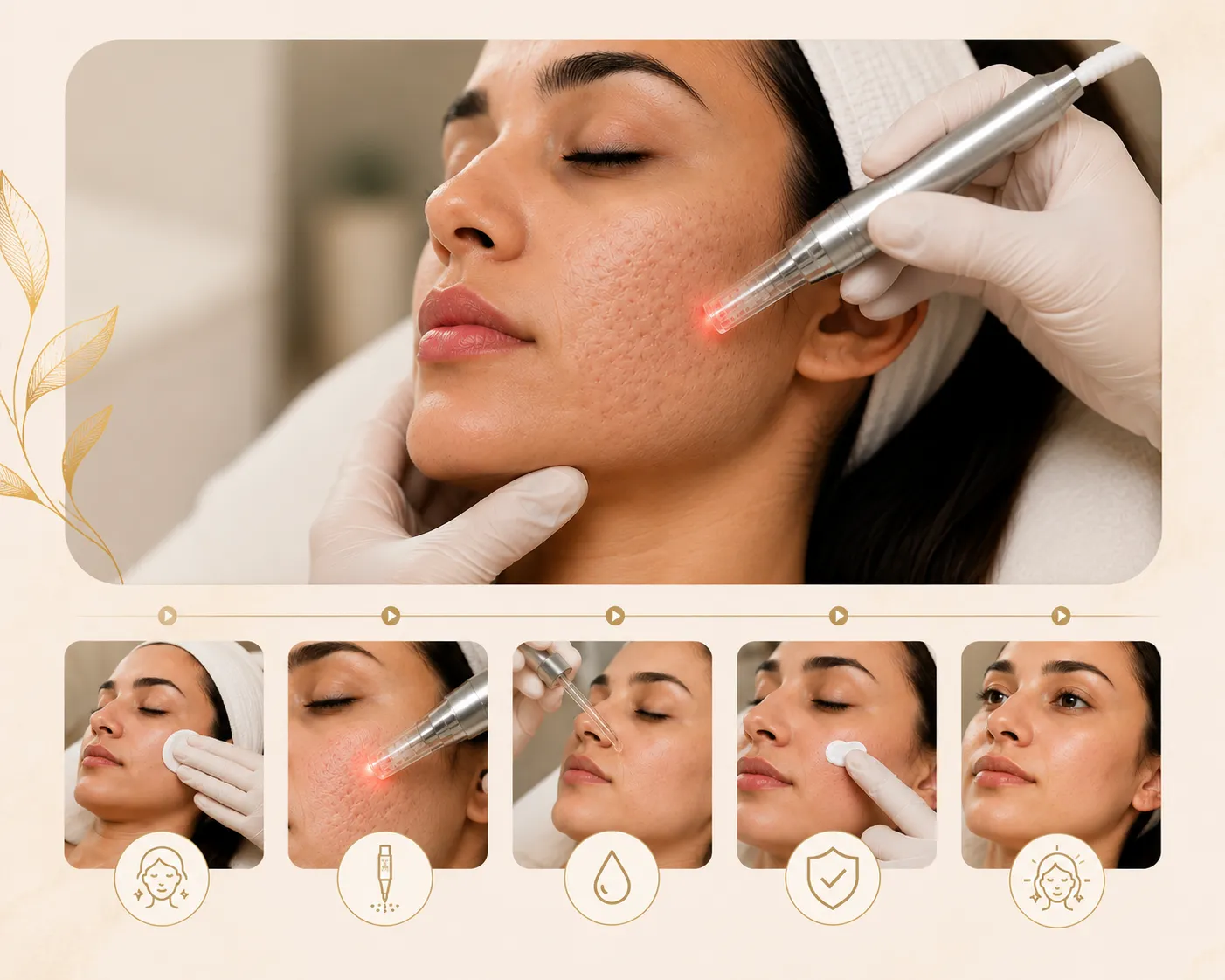
How We Treat Step by Step.
A five-step approach at LaShine — from grading your scar and skin tone to choosing the right laser, then scheduling your full course.
01
Scar Depth & Skin Tone Assessment
Your dermatologist grades your scar type (boxcar, deep rolling, or mixed) and Fitzpatrick skin type, since both determine which laser — and which settings — are appropriate.
02
Modality Selection
Based on that assessment, CO2 laser, MNRF, or a combination plan is recommended, often paired with Microneedling or TCA CROSS for mixed scarring, along with a realistic downtime expectation for your choice.
03
Numbing & Preparation
A topical numbing cream is applied before the session, and the skin is prepped to reduce discomfort during treatment.
04
Laser Application
The chosen device is passed over the treatment area at settings calibrated to your scar depth and skin tone — this is the step where Fitzpatrick-appropriate calibration matters most for avoiding pigmentation complications.
05
Aftercare & Scheduling
Detailed aftercare is provided based on which modality you had — CO2’s longer recovery vs. MNRF’s next-day return to routine — and your next session is scheduled 4–8 weeks out to allow full healing between rounds.
A typical course is 3–4 sessions, spaced 4–8 weeks apart, for either modality — not a single session.
Sessions, Downtime & Results Snapshot
CO2 Laser vs MNRF — Side by Side
Both are effective, clinically studied options for boxcar and deep rolling acne scars — use this snapshot to see how they compare on downtime and pigmentation risk, then book a consultation for a plan built around your specific scars and skin.
- Typical Course: 3–4 sessions, spaced 4–8 weeks apart
- Downtime: Next day to 2 days (mild redness)
- Pigmentation Risk: Lower — often preferred for darker Fitzpatrick types
- Best For: Boxcar/deep rolling scars, gentler recovery
- Not a Fit For: Icepick scars alone, active acne
What to Expect 
Realistic Results & Timeline.
Both modalities work by triggering collagen remodeling that continues well after the visible redness or peeling has settled — not immediately after a session.
Gradual by design, not overnight.
01
Improvement Becomes Visible — 1 to 3 Months
Meaningful improvement in scar depth typically becomes visible around 1–3 months after each session, as collagen remodeling continues beneath the surface.
02
CO2 Laser — More Dramatic Change Per Session
CO2 laser tends to show more dramatic change per session since it resurfaces tissue directly.
03
MNRF — Gradual Across the Course
MNRF's improvement is more gradual across the course, but with a smoother recovery along the way.
04
Full Effect Judged After the Full Course
Neither erases scarring completely — both soften depth and improve texture, and results are most complete when combined with other scar-specific procedures for mixed scarring.
Want Your Actual Timeline?
Bring your scars in and we'll map a realistic timeline and modality choice — not a generic estimate.
Aftercare Guidance 
Protect the Skin While It Heals.
General aftercare principles apply across every treatment in this category — see the Acne & Acne Scar Treatments hub for those. A few points specific to laser and MNRF scar treatment:
Good aftercare now, safer results ahead.
01
Strict Sun Avoidance & SPF
SPF 30–50 for at least 1–2 weeks after CO2 laser (shorter for MNRF) — freshly lasered skin is significantly more vulnerable to pigmentation changes.
02
Follow Your Specific Post-Procedure Skincare
Reepithelialization products and gentle cleansers your dermatologist provides — don’t substitute your regular routine during healing.
03
Avoid Makeup & Heavy Sweating
Skip makeup, pools, saunas, and heavy sweating until your dermatologist confirms the area has healed — this window is longer after CO2 laser than after MNRF.
04
Report Changes Promptly
Report any unusual pigmentation change, prolonged redness, or signs of infection promptly rather than waiting for your next scheduled review.
Questions About Aftercare?
Our team will walk you through exactly what to do between sessions.
OUR EXPERT CARE
Expert Care. The Right Laser.
Every acne scar laser treatment plan at LaShine is built and supervised by a qualified dermatologist, so your choice between CO2 laser, MNRF, or a combination is made for your scar depth and skin tone — not applied as a fixed default.

Dermatologist
Supervised Care
9+ YearsClinical Experience
Dr. Shabari A, MBBS, MD DVL
Dermatologist & Cosmetologist
Completed her MBBS and MD in Dermatology, Venereology & Leprosy, with 9 years of overall experience in laser and energy-based scar treatments, including CO2 laser and MNRF.
CO2 laser and MNRF are both effective, but they behave differently on Indian skin. I choose between them — or combine them — based on scar depth, skin tone, and how much downtime a patient can realistically manage.
MBBS, MD DVL
Dermatology, Venereology & Leprosy
9 Years
Overall Clinical Experience
Specialized In
Laser & Energy-Based Scar Treatments
Evidence-Based
Fitzpatrick-Calibrated Settings
Patient-First
Personalised, Sequenced Care

Dermatologist
Supervised Care
IADVLMember
Dr. Lavanya Kavimani, MBBS
Dermatology Care, IADVL Member
Completed her MBBS at Tbilisi State Medical University in 2018, and is a registered member of the Indian Association of Dermatologists, Venereologists and Leprologists (IADVL).
Device choice and parameters for laser and MNRF are dermatologist-controlled here, not a fixed protocol borrowed from lighter-skin studies — that's what keeps pigmentation risk in check on Indian skin.
MBBS
Tbilisi State Medical University, 2018
Registration
134837 — Tamil Nadu Medical Council, 2019
IADVL Member
Indian Association of Dermatologists, Venereologists & Leprologists
Specialized In
Acne Scar Laser & MNRF Treatment Care
Patient-First
Approach with Personalised Care
01/02
Struggling with deep acne scars?Discover how CO₂ Laser restores smooth skin.
Watch Dr. Shabari Arumugam explain how fractional CO₂ laser stimulates collagen to smooth persistent acne scars.

- Stimulates Natural Collagen
- Targets Deep & Multi-type Scars
- Gradual & Multi-session Results
- Customized Dermatological Plan
Dr. Shabari ArumugamDermatologist
FAQs
Frequently Asked Questions
Your questions about acne scar laser treatment, answered by our experts. Clear answers. Real guidance.
Still Have Questions?
Speak to our dermatologist and get an honest recommendation for your scars.
Book a ConsultationDermatologist Supervised Medical-Grade Care
Safe & Effective
No Downtime
Instant Glow
CO2 laser resurfaces skin directly and tends to show faster, more visible results, but needs 5–7 days of downtime and carries a higher pigmentation risk on darker skin. MNRF works through insulated microneedles without ablating the surface, so downtime is shorter (next day to 2 days) with a better pigmentation safety profile — a common reason it’s preferred for Indian skin tones.
Pricing depends on the modality chosen — CO2 laser and MNRF are typically priced differently — and on how many sessions your scarring needs. Book a consultation for an accurate, current quote based on your scar depth and skin tone.
Yes, when settings are calibrated to your specific Fitzpatrick skin type — this is exactly why device choice and parameters are dermatologist-controlled at LaShine rather than using a fixed protocol borrowed from lighter-skin studies.
Most patients need 3–4 sessions, spaced roughly 4–8 weeks apart, for either modality. Deeper or more extensive scarring may need additional sessions or a combination with other procedures.
Not well on its own — icepick scars respond poorly to laser alone and typically need TCA CROSS, sometimes combined with laser for patients who have a mix of scar types.
CO2 laser typically needs 5–7 days before skin looks presentable without heavy makeup; MNRF usually allows a return to normal activities the next day, with mild redness settling within 1–2 days.
Your dermatologist grades your scar type and depth, assesses your skin tone, and recommends CO2 laser, MNRF, or a combination plan — along with a realistic downtime expectation for whichever option fits your scars and schedule.
We're Here to Help
Not sure whether CO2 laser or MNRF suits your scars? Book a consultation with our dermatologist today.
Explore More
Related Treatments
Explore other ways we treat acne, scars & blemishes alongside Acne Scar Laser Treatment.
Related Categories You May Also Need
Not sure which acne or scar treatment fits your skin?
Start with a full skin assessment — your dermatologist maps the right combination before recommending anything.
Dermatologist
Supervised
Combination
Plans
Safe &
Sequenced
Personalised
Care
LaShine Skin & Hair Clinic
Not Sure Whether CO2 Laser or MNRF Suits Your Scars?
If you’re concerned about your skin, hair, or health, we’re here to help with expert treatment. Book a private consultation at LaShine Skin & Hair Clinic in Saravanampatti, Coimbatore. Your dermatologist can guide you through symptoms, appropriate testing, diagnosis, treatment and follow-up.
Book ConsultationPrivate consultation with a dermatologistChat on WhatsAppAsk about testing, treatment or appointmentsCall Now: 63695 10063Mon – Sun | 10:00 AM – 1:00 PM, 5:30 PM – 9:00 PM
Confidential Care
Dermatologist Led
Appropriate Testing
Personalised Guidance
Areas We Serve
Acne Scar Laser Treatment Care Across Coimbatore
Patients visit LaShine Skin & Hair Clinic in Saravanampatti from across Coimbatore for personalised Acne Scar Laser Treatment and professional dermatologist-led care.
Saravanampatti
- Saravanampatti
- Vilankurichi
- Kalapatti
- Peelamedu
- Gandhipuram
- RS Puram
- Ganapathy
- Thudiyalur
- Sathy Road
- Avinashi Road
Looking for Acne Scar Laser Treatment near your area? You can visit our Saravanampatti clinic and speak with the dermatologist privately.
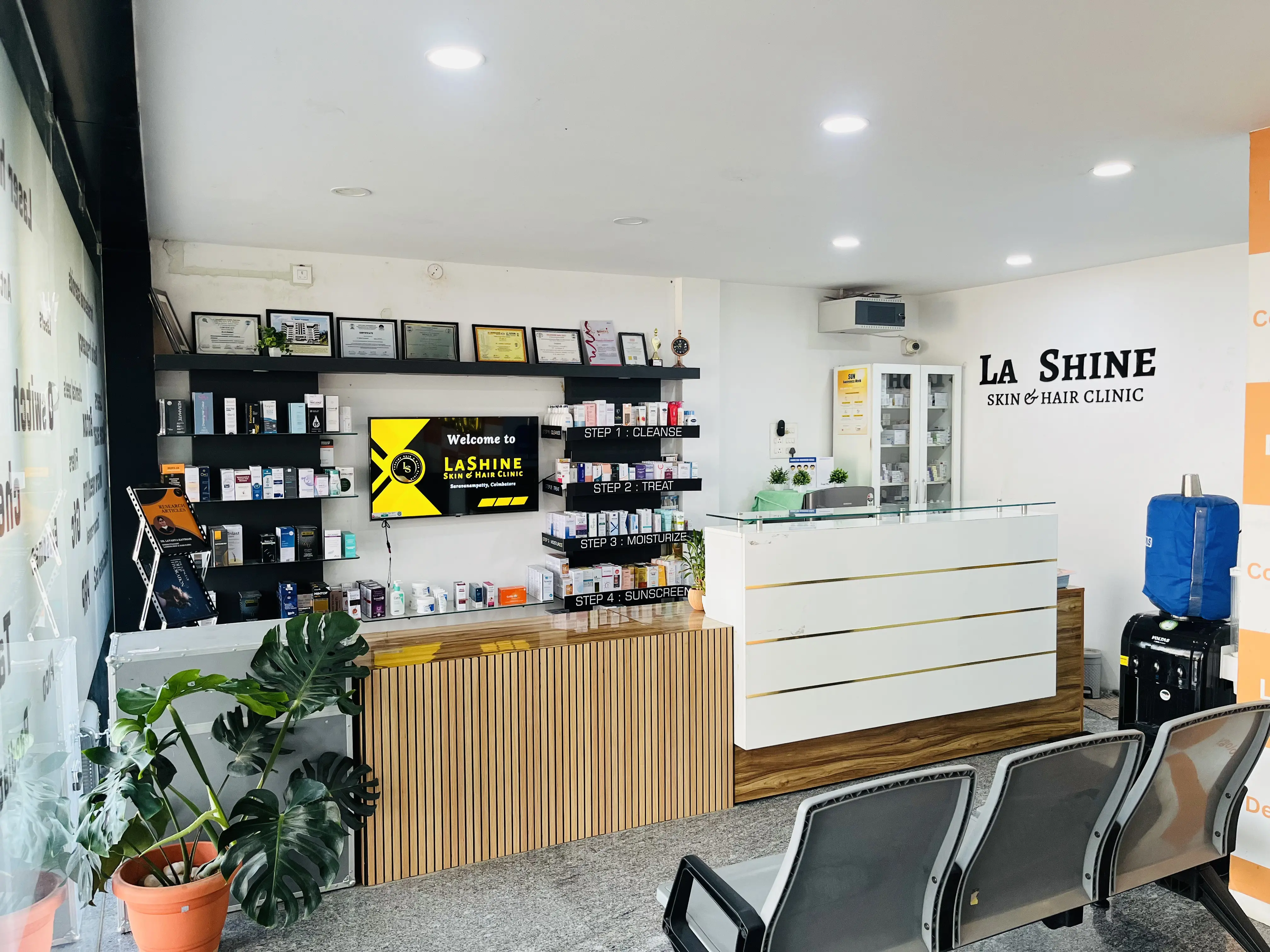
Private Dermatologist-Led Care
Visit Us
LaShine Skin & Hair Clinic
101A/3, First Floor,Sathy Rd, Amman Kovil,Saravanampatti, Coimbatore – 641035,Tamil Nadu, India
View on Google MapsYour concerns deserve private, professional care. Take the next step towards clear answers and appropriate treatment.